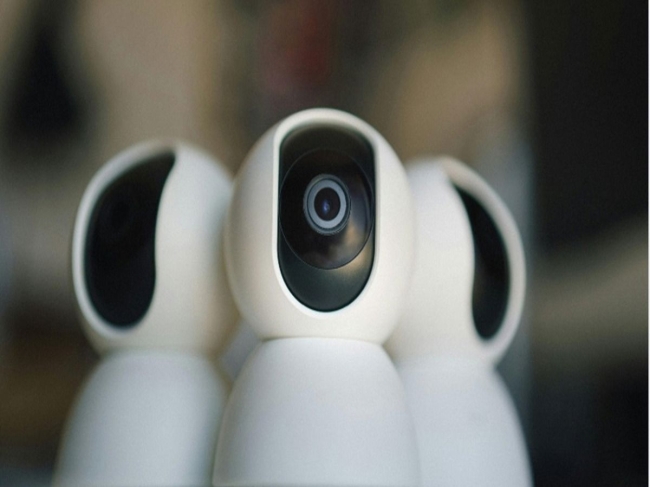
Understanding why some night vision cameras have red lights is important for anyone using security cameras to monitor homes, businesses, driveways, gardens, or other areas after dark. The red glow often comes from infrared (IR) LEDs, which help security cameras capture images in low-light or completely dark environments. However, not every night vision camera has visible red lights.
Night vision cameras generally use infrared illumination to improve... moreDo All Night Vision Cameras Have Red Lights?
Understanding why some night vision cameras have red lights is important for anyone using security cameras to monitor homes, businesses, driveways, gardens, or other areas after dark. The red glow often comes from infrared (IR) LEDs, which help security cameras capture images in low-light or completely dark environments. However, not every night vision camera has visible red lights.
Night vision cameras generally use infrared illumination to improve visibility when there is little or no ambient light. Cameras with visible infrared LEDs may produce a faint red glow when the LEDs are active, especially when viewed directly. This does not necessarily mean the camera is recording or malfunctioning—it is usually a normal part of how traditional infrared night vision works.
Some modern security cameras use infrared LEDs that operate at wavelengths that are much less visible to the human eye. These cameras may provide night vision without producing an obvious red glow. Other models use technologies such as color night vision, low-light sensors, or supplemental lighting to produce clearer nighttime images without relying entirely on traditional visible infrared illumination.
Whether a night vision camera shows a red light can depend on the type of infrared LEDs it uses, the camera design, viewing angle, surrounding lighting, and the specific night vision technology included. A faint red glow can therefore be normal, while the absence of a red light does not necessarily mean that night vision is not working.
If you're trying to determine whether a security camera is operating at night, it is better to check the camera's live view, night vision settings, indicator lights, or recorded footage rather than relying only on whether you can see a red glow. Different manufacturers and camera models may use different approaches to nighttime illumination.
Whether you're installing a home security camera, checking an existing CCTV system, or looking for a discreet night vision camera, understanding the difference between visible and invisible infrared illumination can help you choose the right system. Factors such as nighttime image quality, infrared range, low-light performance, motion detection, resolution, and camera placement are often more important than whether the camera produces a visible red light.
Are Nanny Cams Illegal in Australia? Australian Laws, Privacy Rules and What Parents Need to Know
Understanding whether nanny cams are illegal in Australia is important for parents and homeowners who want to monitor children, caregivers, pets, or activities inside their homes. While using a security camera in a private residence is not automatically illegal, Australian privacy and surveillance laws can place restrictions on how cameras are used, particularly when they record private conversatio... moreAre Nanny Cams Illegal in Australia? Australian Laws, Privacy Rules and What Parents Need to Know
Understanding whether nanny cams are illegal in Australia is important for parents and homeowners who want to monitor children, caregivers, pets, or activities inside their homes. While using a security camera in a private residence is not automatically illegal, Australian privacy and surveillance laws can place restrictions on how cameras are used, particularly when they record private conversations or capture people in circumstances where they reasonably expect privacy.
The laws surrounding nanny cams can vary between Australian states and territories. Rules may cover video surveillance, audio recording, consent, privacy, and the use or disclosure of recorded footage. In some situations, recording video may be treated differently from recording audio, making it important to understand the specific rules that apply in your location before installing or using a nanny cam.
Nanny cameras can be used for legitimate purposes such as checking on children, monitoring a baby's room, keeping an eye on pets, or improving home security. However, placing a camera in sensitive areas such as bathrooms, bedrooms used by other adults, or private spaces may create serious privacy concerns. Hidden cameras can also raise additional legal and ethical issues depending on where they are installed and who is being recorded.
When considering a nanny cam in Australia, important factors include whether the camera records audio, where it is positioned, whether people being recorded have been informed, applicable state or territory surveillance laws, how recordings are stored, and who can access the footage. Checking the rules in your state or territory is particularly important because privacy and listening-device laws are not identical across Australia.
Whether you're considering a nanny cam for childcare, home security, elderly care, pet monitoring, or peace of mind, understanding Australia's surveillance and privacy requirements can help you use the technology responsibly. Knowing when consent may be required, where cameras should not be placed, and how recorded footage should be handled can help reduce privacy risks and potential legal problems.
Can My Security Camera Be Hacked? Understanding CCTV Security Risks and Protection
Understanding whether security cameras can be hacked is important for anyone using CCTV or smart cameras to protect their home, business, property, or family. Modern security cameras often connect to the internet through Wi-Fi or other network connections, which can provide convenient remote viewing but may also introduce cybersecurity risks if the camera or network is not properly secured.
Security cameras can ... moreCan My Security Camera Be Hacked? Understanding CCTV Security Risks and Protection
Understanding whether security cameras can be hacked is important for anyone using CCTV or smart cameras to protect their home, business, property, or family. Modern security cameras often connect to the internet through Wi-Fi or other network connections, which can provide convenient remote viewing but may also introduce cybersecurity risks if the camera or network is not properly secured.
Security cameras can potentially be compromised through weak passwords, outdated firmware, unsecured Wi-Fi networks, vulnerable apps, exposed network ports, or compromised user accounts. In some cases, attackers may attempt to gain unauthorized access to camera feeds, change camera settings, disable recording, or use a compromised camera as an entry point into a larger home or business network.
The risk of a security camera being hacked depends on several factors, including the camera's security features, manufacturer updates, password strength, network configuration, and how the device is accessed remotely. Cameras that use strong encryption, regular firmware updates, secure authentication, and reputable mobile applications generally provide better protection against common threats.
To reduce the risk of your security camera being hacked, use a strong and unique password, enable two-factor authentication when available, keep the camera and its app updated, secure your Wi-Fi network, disable unnecessary remote-access features, and regularly review connected devices and account activity. It is also helpful to purchase cameras from reputable manufacturers that provide ongoing security updates and support.
Whether you use a smart indoor camera, outdoor CCTV system, video doorbell, or professional surveillance setup, understanding common security risks can help you protect your camera footage and personal privacy. Taking a few basic cybersecurity precautions can make your security camera system significantly harder for unauthorized users to access.
How Can I Detect Hidden Cameras? A Practical Guide
Understanding how to detect hidden cameras is important for anyone concerned about privacy and security in homes, hotel rooms, rental properties, offices, changing rooms, and other private spaces. Hidden cameras can sometimes be disguised as everyday objects or installed in places where they are difficult to notice, making it useful to know the common signs and practical detection methods.
Hidden cameras may be concealed inside devices such as... moreHow Can I Detect Hidden Cameras? A Practical Guide
Understanding how to detect hidden cameras is important for anyone concerned about privacy and security in homes, hotel rooms, rental properties, offices, changing rooms, and other private spaces. Hidden cameras can sometimes be disguised as everyday objects or installed in places where they are difficult to notice, making it useful to know the common signs and practical detection methods.
Hidden cameras may be concealed inside devices such as smoke detectors, clocks, chargers, light fixtures, air purifiers, or other household objects. Some cameras use Wi-Fi or other wireless connections, while others may record footage locally to a memory card. Depending on the device, detection methods can include careful visual inspection, checking for unusual objects or lens reflections, using a flashlight in a dark room, reviewing connected devices on a network, and using specialized camera-detection equipment.
One of the simplest approaches is a thorough physical inspection. Look for objects that seem out of place, unexplained wires, unusually positioned electronics, tiny openings, or small lenses pointed toward areas where privacy is expected. Turning off the lights and using a flashlight can sometimes help reveal reflective camera lenses, although this method is not guaranteed to find every hidden camera.
Technology can also assist with detection. Network-scanning tools may help identify unfamiliar devices connected to a local Wi-Fi network, while radio-frequency detectors can sometimes detect wireless transmissions. However, these methods have limitations because not every hidden camera transmits continuously or uses Wi-Fi, and other electronic devices can create false positives.
When learning how to detect hidden cameras, it is important to use multiple methods rather than relying on a single detector or smartphone app. Carefully inspecting the environment, checking suspicious devices, reviewing network connections when appropriate, and using dedicated detection tools can provide a more reliable approach to identifying potential surveillance equipment.
Whether you're checking a hotel room, vacation rental, workplace, bedroom, or another private area, understanding the warning signs and following a systematic inspection process can help protect your privacy. If you discover a suspected hidden camera in a private or unauthorized setting, avoid tampering with it if doing so could create a safety or legal issue; document what you found and consider contacting the property manager or appropriate local authorities.
10 Best Wireless Solar CCTV Cameras to Buy in 2026: Smart Outdoor Security Solutions Explained
Understanding how wireless solar CCTV cameras work is important for anyone looking for a convenient and energy-efficient way to monitor outdoor spaces. These cameras combine wireless connectivity with solar power, allowing users to keep an eye on homes, properties, driveways, gardens, farms, and other areas without relying heavily on traditional wired power connections.
Wireless solar CCTV cameras ar... more10 Best Wireless Solar CCTV Cameras to Buy in 2026: Smart Outdoor Security Solutions Explained
Understanding how wireless solar CCTV cameras work is important for anyone looking for a convenient and energy-efficient way to monitor outdoor spaces. These cameras combine wireless connectivity with solar power, allowing users to keep an eye on homes, properties, driveways, gardens, farms, and other areas without relying heavily on traditional wired power connections.
Wireless solar CCTV cameras are designed to provide flexible security monitoring while using solar energy to help power the camera. Depending on the model, they may offer features such as HD or 4K video recording, motion detection, night vision, two-way audio, remote viewing, weather-resistant construction, cloud or local storage, and smartphone connectivity. Their wireless design can also make installation easier in locations where running power cables may be inconvenient.
Solar charging is one of the main advantages of these security cameras. A built-in solar panel can recharge the camera's battery during daylight hours, helping extend operating time and reducing the need for frequent manual charging. However, performance can depend on sunlight exposure, weather conditions, battery capacity, and the efficiency of the solar panel.
When choosing one of the best wireless solar CCTV cameras to buy in 2026, important features to consider include video resolution, battery capacity, solar panel performance, wireless connectivity, night vision quality, motion detection, viewing angle, storage options, weather resistance, app functionality, and installation requirements. It is also worth checking whether the camera requires a subscription for cloud storage or advanced features.
Whether you're looking to protect your home, monitor a remote property, improve driveway security, or keep watch over an outdoor area, wireless solar CCTV cameras can provide a practical monitoring solution with fewer wiring requirements. Comparing the available models and choosing one with the right combination of image quality, power efficiency, connectivity, storage, and security features can help create a reliable outdoor surveillance setup.
Great information! Wireless solar CCTV cameras are a practical option for outdoor areas, especially where wired power connections are difficult. Solar charging and easy installation make them quite useful for homes, farms, and remote properties.
10 Best GPS Personal Alarms for Instant Emergency Protection
Understanding how GPS personal alarms work is important for anyone looking for a convenient way to improve personal safety and get help during emergencies. These compact devices combine alarm functions with GPS or location-sharing features, helping users alert trusted contacts and communicate their location when assistance may be needed.
GPS personal alarms are designed to provide quick access to emergency assistance while remaining ... more10 Best GPS Personal Alarms for Instant Emergency Protection
Understanding how GPS personal alarms work is important for anyone looking for a convenient way to improve personal safety and get help during emergencies. These compact devices combine alarm functions with GPS or location-sharing features, helping users alert trusted contacts and communicate their location when assistance may be needed.
GPS personal alarms are designed to provide quick access to emergency assistance while remaining small and easy to carry. Depending on the model, they may offer features such as GPS location tracking, SOS buttons, loud sirens, emergency alerts, two-way communication, fall detection, real-time location sharing, and mobile connectivity. Their compact design makes them suitable for everyday carry, outdoor activities, travel, and situations where additional personal safety support is desired.
GPS functionality adds another layer of protection by allowing a user's location to be shared with designated contacts or emergency services when supported. Some devices connect through cellular networks or companion smartphone apps, while others may offer additional location-based features. Coverage, subscription requirements, battery life, and emergency response capabilities can vary significantly between models, so it is important to review the specifications before choosing a device.
Key features to consider when selecting a GPS personal alarm include GPS accuracy, alert activation speed, siren volume, battery life, cellular coverage, two-way communication, location-sharing options, water resistance, subscription costs, and ease of use. Users should also check whether the device works in their area and understand exactly who receives an emergency alert when the SOS function is activated.
Whether you're looking for added peace of mind while traveling, exercising outdoors, commuting, or going about your daily activities, GPS personal alarms can provide a convenient layer of emergency protection. Choosing a device with reliable location tracking, an easy-to-access SOS function, strong connectivity, and dependable battery life can help create a more practical personal safety solution.
GPS Personal Alarms vs. Traditional Alarms: Which One Offers Better Protection?
Understanding the differences between GPS personal alarms and traditional alarms is important for anyone looking for a reliable way to improve personal safety and respond quickly during emergencies. While both types of alarms are designed to attract attention or request help, they use different technologies and offer different levels of protection.
GPS personal alarms combine emergency alert features with location-... moreGPS Personal Alarms vs. Traditional Alarms: Which One Offers Better Protection?
Understanding the differences between GPS personal alarms and traditional alarms is important for anyone looking for a reliable way to improve personal safety and respond quickly during emergencies. While both types of alarms are designed to attract attention or request help, they use different technologies and offer different levels of protection.
GPS personal alarms combine emergency alert features with location-tracking technology. Depending on the model, they may include GPS positioning, SOS buttons, two-way communication, fall detection, mobile connectivity, real-time location sharing, and emergency notifications. These features can make GPS personal alarms particularly useful for people who travel alone, work remotely, participate in outdoor activities, or want an additional layer of personal security.
Traditional alarms generally focus on producing a loud audible alert when activated. Their simplicity can make them easy to carry and operate, and they may be useful for drawing attention to an emergency or potentially discouraging an unwanted situation. However, traditional alarms typically do not provide location tracking or direct communication with an emergency contact.
When comparing GPS personal alarms with traditional alarms, important factors to consider include location tracking, alert methods, battery life, connectivity, ease of use, portability, subscription requirements, and reliability in different environments. GPS-based devices may provide more connected safety features, while traditional alarms can offer a straightforward solution without depending on cellular or GPS services.
Whether you're choosing a personal safety device for everyday use, travel, outdoor activities, work, or the safety of a family member, understanding the strengths and limitations of both options can help you make a more informed decision. The right choice depends on how much connectivity, location awareness, and emergency communication you need from your personal alarm.
Top Rechargeable Trail Cameras for Wildlife Observation
Understanding how rechargeable trail cameras work is important for anyone interested in observing wildlife, monitoring outdoor areas, and capturing animal activity without frequent battery replacements. These cameras combine motion-activated photography and video recording with rechargeable power options, making them a convenient choice for long-term outdoor observation.
Rechargeable trail cameras are designed to operate in outdoor enviro... moreTop Rechargeable Trail Cameras for Wildlife Observation
Understanding how rechargeable trail cameras work is important for anyone interested in observing wildlife, monitoring outdoor areas, and capturing animal activity without frequent battery replacements. These cameras combine motion-activated photography and video recording with rechargeable power options, making them a convenient choice for long-term outdoor observation.
Rechargeable trail cameras are designed to operate in outdoor environments while remaining ready to capture wildlife activity when movement is detected. Depending on the model, they may offer features such as high-resolution photos, video recording, infrared night vision, motion detection, wide detection ranges, weather-resistant construction, and wireless connectivity. Their ability to operate automatically makes them useful for forests, gardens, farms, hunting areas, nature reserves, and wildlife research.
Rechargeable batteries can provide a more convenient and potentially cost-effective power solution compared with disposable batteries. Some trail cameras use built-in rechargeable batteries, while others support removable rechargeable battery packs or solar charging accessories. Battery capacity, charging time, operating temperature, and power-saving features can all affect how long a camera can remain active between charges.
Key features to consider when selecting a rechargeable trail camera for wildlife observation include image and video quality, trigger speed, detection range, night vision performance, battery capacity, storage options, weather resistance, connectivity, and ease of installation. Cameras with efficient motion sensors and low-power standby modes can be particularly useful for extended monitoring sessions.
Whether you're observing wildlife in your backyard, tracking animals in a forest, monitoring a property, or documenting natural behavior, rechargeable trail cameras can provide a practical way to collect photos and videos with minimal maintenance. Choosing a model with the right combination of image quality, battery performance, detection capabilities, durability, and storage can help create a reliable wildlife observation setup.
Mini Surveillance Cameras with Audio: Compact Monitoring Solutions Explained
Understanding how mini surveillance cameras with audio work is important for anyone looking for a compact way to monitor spaces, record activity, and improve security. These small cameras combine video recording with audio capabilities, making them useful for a variety of monitoring applications.
Mini surveillance cameras are designed to provide discreet video monitoring while taking up minimal space. Depending on the... moreMini Surveillance Cameras with Audio: Compact Monitoring Solutions Explained
Understanding how mini surveillance cameras with audio work is important for anyone looking for a compact way to monitor spaces, record activity, and improve security. These small cameras combine video recording with audio capabilities, making them useful for a variety of monitoring applications.
Mini surveillance cameras are designed to provide discreet video monitoring while taking up minimal space. Depending on the model, they may offer features such as HD video recording, motion detection, night vision, wide-angle viewing, loop recording, and wireless connectivity. Their compact size makes them suitable for homes, offices, vehicles, storage areas, and other locations where a smaller camera is preferred.
Audio recording adds another layer of information by capturing sound along with video. Some models include built-in microphones and may support two-way audio, allowing users to listen to the monitored area or communicate remotely when the feature is available. Audio and video capabilities can vary significantly between models, so it is important to check specifications before choosing a camera.
Key features to consider when selecting mini surveillance cameras with audio include video resolution, microphone quality, storage options, battery life, connectivity, motion detection, low-light performance, and ease of installation. Privacy and local recording laws should also be considered, particularly when recording audio or monitoring areas where other people may be present.
Whether you're looking for a compact security solution for your home, workplace, vehicle, or personal property, mini surveillance cameras with audio can provide convenient monitoring in a small form factor. Choosing a model with the right combination of video quality, audio functionality, storage, and security features can help you create a more effective and responsible monitoring setup.
Solar CCTV Cameras vs. Traditional Cameras: Key Differences Explained
Understanding the difference between solar CCTV cameras and traditional CCTV cameras is essential for homeowners, business owners, and security professionals who want to choose the right surveillance solution. While both types of cameras are designed to monitor and protect properties, they differ significantly in terms of power source, installation, maintenance, and flexibility.
Solar CCTV cameras use solar panels to generat... moreSolar CCTV Cameras vs. Traditional Cameras: Key Differences Explained
Understanding the difference between solar CCTV cameras and traditional CCTV cameras is essential for homeowners, business owners, and security professionals who want to choose the right surveillance solution. While both types of cameras are designed to monitor and protect properties, they differ significantly in terms of power source, installation, maintenance, and flexibility.
Solar CCTV cameras use solar panels to generate and store energy, allowing them to operate without relying on a constant connection to the electrical grid. This makes them particularly useful for remote locations, outdoor areas, construction sites, farms, and properties where running power cables can be difficult or expensive. Many solar CCTV systems also include rechargeable batteries, enabling continuous surveillance even during periods of limited sunlight.
Traditional CCTV cameras, on the other hand, typically depend on wired electrical connections for power. They are commonly installed in homes, offices, retail stores, warehouses, and other locations with reliable access to electricity. While traditional cameras can provide consistent performance, their installation may require additional wiring, electrical work, and infrastructure.
Key differences between solar CCTV cameras and traditional cameras include their power source, installation requirements, operating costs, maintenance needs, and suitability for different locations. Solar CCTV cameras offer greater flexibility and can reduce dependence on grid electricity, while traditional CCTV systems can be a practical choice for properties with established electrical infrastructure.
Whether you're securing a residential property, commercial facility, or remote outdoor area, understanding these differences can help you select a CCTV system that matches your security needs, budget, and installation environment.
Choosing the right GPS safety alarm can provide an added layer of protection for people who want quick access to emergency alerts, location sharing, and personal safety features. With many devices available today, understanding their key features can help you choose an option that fits your needs and lifestyle.
GPS safety alarms are designed to help users alert trusted contacts or emergency services when they feel unsafe. Depending on the device, ... moreBest GPS Safety Alarms for Personal Protection
Choosing the right GPS safety alarm can provide an added layer of protection for people who want quick access to emergency alerts, location sharing, and personal safety features. With many devices available today, understanding their key features can help you choose an option that fits your needs and lifestyle.
GPS safety alarms are designed to help users alert trusted contacts or emergency services when they feel unsafe. Depending on the device, features may include real-time GPS tracking, SOS buttons, automatic location sharing, loud sirens, two-way communication, and smartphone connectivity. These tools can be especially useful when traveling, walking alone, working late, or responding to unexpected emergencies.
When comparing GPS safety alarms, important factors include GPS accuracy, battery life, ease of use, alert speed, connectivity, durability, and subscription requirements. Some devices are designed for discreet everyday use, while others prioritize loud alarms and highly visible emergency controls.
The best GPS safety alarm depends on your personal circumstances and the features you value most. A reliable device should be easy to activate during stressful situations and provide dependable location information to your chosen contacts or emergency responders.
Whether you're looking for personal protection, a safety device for an elderly family member, or an extra layer of security while traveling, comparing GPS safety alarms can help you make a more informed decision and choose a device that provides greater confidence and peace of mind.