
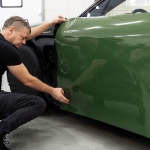


Exterior parts can be changed after a vehicle has been wrapped, but the effect on the film depends on where the new component sits and how the original wrap was installed. Removing a spoiler, badge, trim piece, or other component may expose film edges, uncovered paint, adhesive residue, or mounting points.
Drivers who expect to modify a vehicle later can avoid some complications by identifying those plans before the wrap is installed. The goal is not necessarily to complete every modification first, but to understand which parts may affect wrapped panels.
Map future exterior changes before the wrap
Start by listing exterior components that may be added, removed, or replaced. This might include spoilers, badges, trim, exterior lighting components, or other body accessories.
Next, identify which panels each change will affect. A modification attached entirely to a trunk lid creates different considerations from one that extends across several panels.
This planning matters because wrap installation involves finishing film around panel edges, curves, channels, and exterior features. For some applications, parts may be removed to provide access during installation.
For example, 3M includes removal of external features such as mirrors, door handles, spoilers, diffusers, and emblems in its surface-preparation instructions for a specific vehicle wrap-film application.
Understand how an exterior part meets the wrap
A component can interact with wrapped film in several ways. It may sit over the film, require access through it, or cover an area where the installer has finished the film around an existing part.
The wrap process described by Ace Built Automotive includes vehicle inspection, surface preparation, film installation, finishing, and aftercare. Those stages provide useful context for why planned exterior changes should be identified before installation begins.
Attachment methods also matter. A component may use clips, bolts, adhesive, or existing mounting points. Installing a new part could therefore affect more than the visible surface.
Before changing a wrapped vehicle, establish how the component is attached and whether the surrounding film must be disturbed to remove or install it.
Check what is underneath an existing part
Do not assume that film continues uninterrupted underneath every component.
If a spoiler, badge, molding, or similar feature was present when the vehicle was wrapped, film may have been fitted around that feature. Removing it later could reveal paint, mounting holes, adhesive residue, or film edges.
The opposite is also possible if a component was removed during installation and the film was applied beneath its mounting area.
The only reliable approach is to determine how that particular area was wrapped before assuming the exposed surface will match the rest of the panel.
Care is also necessary when removing adhesive-backed components. Tools, chemicals, and removal methods that are suitable for painted surfaces may not automatically be appropriate for wrap film. Product-specific film guidance should be followed.
Compare the footprint of old and new parts
Replacement parts do not always occupy the same area.
Consider a vehicle with a factory spoiler that is later replaced by a differently shaped component. The replacement could use different mounting points or cover a larger or smaller portion of the trunk.
A smaller component may expose areas that were previously hidden. A larger one could cover existing film or extend across edges and contours that were not involved in the original installation.
The same principle applies to badges, trim pieces, exterior accessories, and other body components. Compare the footprint and attachment points of the old and new parts before removing anything.
Determine whether local wrap work is needed
A modification that affects one panel does not automatically mean the entire vehicle has to be wrapped again.
The condition and location of the affected film need to be evaluated first. In some circumstances, attention may be limited to the panel involved.
Matching the appearance of replacement film to an existing wrap can present another consideration. 3M notes in its Wrap Film Series 2080 maintenance guidance that a replacement section can appear different because of factors such as manufacturing-lot color variation, the age and condition of existing film, and changes in gloss or color that have occurred over time.
This means a technically similar film does not guarantee that a repaired section will look identical to film that has already spent time on the vehicle.
Treat modifications as parts of one project
Exterior changes are easier to map when they are viewed as parts of a larger vehicle plan. A driver might be considering body modifications, lighting, wheels, exterior accessories, or several changes over time.
A page showing examples of custom automotive projects can serve as a reference for the types of modifications that may be involved in a broader build. The important planning step is identifying which of those changes will physically interact with wrapped panels.
Create a simple project list with three categories: modifications planned before wrapping, changes expected later, and components that are likely to remain untouched. Note which body panels each change affects.
That list can reveal potential conflicts before film is installed.
Use a checklist before changing a wrapped vehicle
Before removing or adding an exterior component, identify how it is attached and which wrapped panels surround it. Check whether the existing film extends underneath the part and compare the footprint of the replacement with the component being removed.
Also determine whether drilling, adhesive, fasteners, or changes to existing mounting points are involved. If film needs to be replaced locally, identify the original film product and finish where possible.
A vehicle wrap does not prevent future exterior modifications, but later changes can affect film around mounting points, edges, and previously covered areas. Mapping likely modifications before wrapping and checking how existing parts interact with the film can reduce unexpected rework when the vehicle changes later.