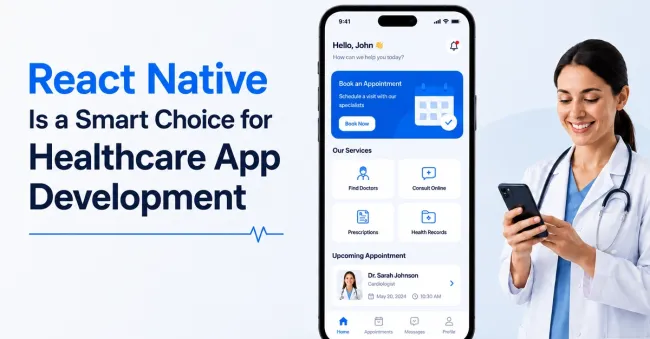
Can one mobile app framework help healthcare businesses reach more patients?
React Native supports cross-platform development, smoother patient experiences, and efficient maintenance for healthcare applications.
Explore its key benefits, security considerations, and the factors to evaluate before choosing it for your healthcare app. Read the complete article now to know more!
#ReactNativeAppD... moreCan one mobile app framework help healthcare businesses reach more patients?
React Native supports cross-platform development, smoother patient experiences, and efficient maintenance for healthcare applications.
Explore its key benefits, security considerations, and the factors to evaluate before choosing it for your healthcare app. Read the complete article now to know more!
What Is the Difference Between EHR and EMR Systems?
Healthcare providers use digital systems to store patient information, manage medical records, and support better patient care. Two commonly used technologies are Electronic Health Record (EHR) systems and Electronic Medical Record (EMR) systems. Although these terms are often used interchangeably, they serve different purposes in healthcare.
An EMR system stores a patient's medical information within a single medical practice or healthcare f... moreWhat Is the Difference Between EHR and EMR Systems?
Healthcare providers use digital systems to store patient information, manage medical records, and support better patient care. Two commonly used technologies are Electronic Health Record (EHR) systems and Electronic Medical Record (EMR) systems. Although these terms are often used interchangeably, they serve different purposes in healthcare.
An EMR system stores a patient's medical information within a single medical practice or healthcare facility. It typically includes medical history, diagnoses, medications, treatment plans, test results, and clinical notes. EMR systems help doctors and healthcare staff maintain organized digital records, reduce paperwork, and access important patient information during appointments.
An EHR system offers a broader view of a patient's health by bringing together medical information from different healthcare providers and settings. Depending on the system and its integrations, authorized professionals can securely share and access patient records across clinics, hospitals, laboratories, and other healthcare organizations. This helps support care coordination and gives providers a more complete understanding of a patient's medical history.
The main difference between EHR and EMR systems is how patient information is used and shared. EMR systems primarily support recordkeeping within an individual practice, while EHR systems are designed to support a more connected approach to healthcare information. Both systems can improve documentation, streamline clinical workflows, and help healthcare professionals make informed decisions.
When choosing between EHR and EMR systems, healthcare providers should consider their practice size, patient care requirements, data-sharing needs, software integrations, security features, and budget. Features such as appointment scheduling, prescription management, reporting, access controls, and interoperability can also influence which solution best fits their workflow.
Whether you're managing a small medical office, a specialty clinic, or a larger healthcare organization, understanding the difference between EHR and EMR systems can help you choose the right technology. While both solutions help digitize patient records, the best option depends on how your organization manages information, coordinates care, and supports patients throughout their healthcare journey.
EHR and EMR systems are more than digital replacements for paper records. When selected and implemented appropriately, they can help improve information accessibility, reduce administrative work, strengthen documentation practices, and support a more organized healthcare experience.
What Are All the Types of Medical Scheduling Systems?
Medical scheduling systems help healthcare providers organize patient appointments, manage staff availability, and keep daily operations running smoothly. Different types of medical scheduling systems are designed to meet the needs of hospitals, clinics, private practices, and specialty healthcare facilities. Choosing the right system can help reduce scheduling conflicts, improve communication, and make appointment booking more convenient fo... moreWhat Are All the Types of Medical Scheduling Systems?
Medical scheduling systems help healthcare providers organize patient appointments, manage staff availability, and keep daily operations running smoothly. Different types of medical scheduling systems are designed to meet the needs of hospitals, clinics, private practices, and specialty healthcare facilities. Choosing the right system can help reduce scheduling conflicts, improve communication, and make appointment booking more convenient for patients.
Common types of medical scheduling systems include manual scheduling, appointment book scheduling, electronic scheduling, online appointment scheduling, patient self-scheduling, centralized scheduling, integrated scheduling, and automated scheduling systems. Each type offers different ways to manage appointments, coordinate healthcare staff, and handle changes to patient schedules.
Online Appointment Scheduling Software allows patients to book appointments through a website or online portal, while patient self-scheduling systems give patients more control over selecting available time slots. Electronic scheduling systems help staff manage calendars digitally, and centralized scheduling systems allow multiple departments or locations to coordinate appointments from one place. Integrated systems can connect scheduling with electronic health records (EHR), practice management software, and patient communication tools.
Advanced features such as automated appointment reminders, real-time availability updates, cancellation management, recurring appointments, calendar synchronization, and patient notifications can help healthcare teams reduce administrative work. Some systems also support walk-in appointments, appointment waitlists, and staff scheduling, making it easier to manage changing patient needs throughout the day.
Whether you're managing a small medical office, a dental clinic, a specialty practice, or a large hospital, understanding the different types of medical scheduling systems can help you choose an option that fits your workflow. The right solution depends on your appointment volume, staffing requirements, budget, existing software, and the level of convenience you want to offer patients.
Medical scheduling systems are more than tools for booking appointments. They help healthcare providers maintain organized schedules, improve access to care, reduce avoidable scheduling errors, and create a smoother experience for patients and staff. By comparing the available options, healthcare practices can find a scheduling approach that supports their daily operations and long-term goals.