


Hex nuts are precision fasteners used with bolts, threaded rods, and studs to create secure mechanical joints. Selection depends on thread standard, pitch, material, grade, dimensions, and surface finish.
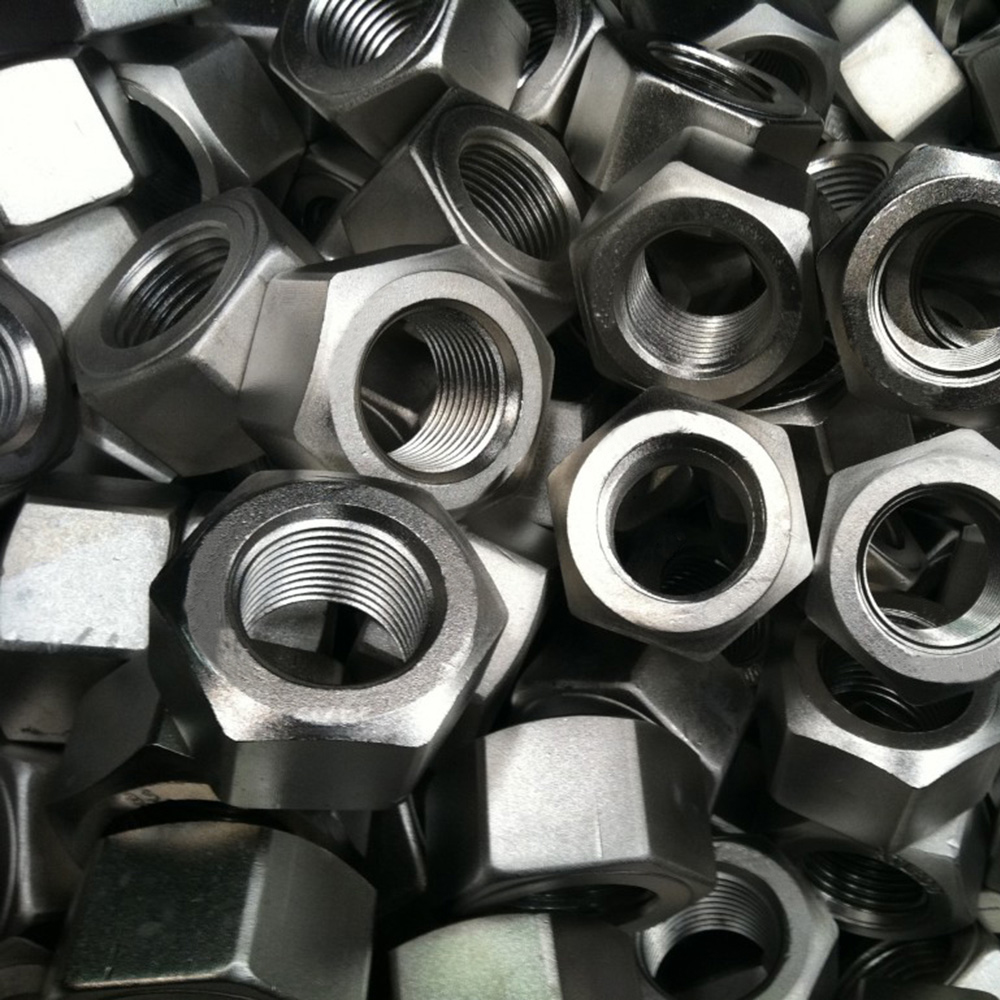
Industrial hex nuts are specified according to standards such as DIN, ISO, ASTM, and ASME, with material and grade selected based on load, corrosion resistance, temperature, and operating conditions.
What Is a Hex Nut?
A hex nut is a six-sided internally threaded fastener used with compatible bolts, threaded rods, and studs. It is available in metric and inch thread systems, various materials, grades, and finishes for industrial applications.
Proper thread compatibility is essential to ensure secure engagement, reliable preload, and prevent thread damage.
Hex Nut Thread Standards
Thread standard is one of the most important specifications when selecting a hex nut. Different standards define thread form, dimensions, tolerances, and pitch.
Metric Threads
Metric hex nuts commonly use ISO metric threads designated by the letter M followed by the nominal diameter. For example, M8, M10, M12, and M16 hex nuts identify the nominal thread diameter.
Metric nuts may be supplied with coarse or fine thread pitches depending on application requirements. Fine threads provide a smaller pitch and can be useful where adjustment, vibration resistance, or available thread engagement requires specific characteristics.
UNC and UNF Threads
In inch-based fastening systems, Unified National Coarse (UNC) and Unified National Fine (UNF) threads are widely used. UNC generally provides a coarser pitch, while UNF uses a finer pitch.
The nut must be selected according to the exact thread designation of the mating bolt or threaded rod. Nominal diameter alone is not sufficient for determining thread compatibility.
DIN and ISO Standards
DIN and ISO standards define dimensional and technical requirements for various types of nuts. Standardized dimensions help maintain interchangeability and consistent installation across industrial assemblies.
For OEM hex nuts and engineering applications, buyers may specify the applicable standard together with size, material, property class, and finish.
Hex Nut Materials
The operating environment and mechanical requirements determine the appropriate nut material.
Carbon Steel Hex Nuts
Carbon steel is widely used for general industrial fastening applications because it provides a combination of strength, machinability, and cost efficiency. Carbon steel hex nuts can also receive protective coatings to improve corrosion resistance.
Stainless Steel Hex Nuts
Stainless steel hex nuts are commonly selected for applications requiring improved corrosion resistance. Grades such as stainless steel 304 and 316 are used in different industrial environments.
Stainless steel 316 can be considered where increased resistance to chloride exposure and demanding environments is required. Material selection should always match the actual service conditions.
Brass Hex Nuts
Brass hex nuts offer corrosion resistance, good machinability, and useful electrical properties. They are commonly considered for electrical equipment, instrumentation, plumbing-related assemblies, and applications where brass is compatible with the surrounding materials.
Alloy Steel Hex Nuts
Alloy steel hex nuts can provide higher mechanical performance for demanding fastening applications. The specific grade and heat treatment should be selected according to the required mechanical properties and applicable standard.
Hex Nut Grades and Mechanical Strength
Hex nut grades or property classes indicate mechanical performance requirements. The appropriate grade depends on the bolt strength, joint design, loading conditions, and applicable specification.
For metric fasteners, property classes such as 8, 10, and 12 are commonly encountered. The nut should be selected as part of the complete fastening system rather than independently.
In applications involving high-strength bolts, using a nut with inadequate mechanical properties can affect joint reliability. Engineers should therefore verify the relevant standard, proof load, hardness, and other required mechanical characteristics.
Hex Nut Dimensions and Tolerances
Key hex nut dimensions include thread diameter, thread pitch, across-flats size, nut thickness, chamfer, and thread tolerance. Proper tolerances ensure consistent dimensions and smooth assembly.
For custom hex nuts and OEM components, drawings can specify required dimensions, tolerances, thread type, material grade, and surface finish.
Surface Finishes for Hex Nuts
Surface treatment can improve corrosion protection and provide the required appearance or functional characteristics.
Common finishes include zinc plating, hot-dip galvanizing, black oxide, plain or self-colour finishes, and other specified coatings.
The correct finish depends on environmental exposure, corrosion requirements, temperature, assembly conditions, and compatibility with the mating fastener. In outdoor and industrial environments, protective coatings can be particularly important.
Hex Nut Applications
Hex nuts are widely used in construction, automotive, machinery, electrical, HVAC, infrastructure, heavy engineering, OEM equipment, and maintenance applications.
For specialized requirements, custom hex nuts can be manufactured with specific dimensions, materials, threads, and surface finishes.
How to Select the Correct Hex Nut
When sourcing hex nuts, buyers should verify the following specifications:
- Thread system – Metric, UNC, UNF, or another required standard.
- Nominal size – Confirm the exact thread diameter.
- Thread pitch – Match the pitch with the mating component.
- Material – Select according to strength and environmental conditions.
- Property class or grade – Ensure suitable mechanical performance.
- Dimensions – Verify across-flats, thickness, and other required measurements.
- Surface finish – Select the appropriate corrosion protection.
- Applicable standard – Confirm DIN, ISO, ASTM, ASME, or customer specification.
- Inspection requirements – Consider dimensional, thread, hardness, and material testing where required.
Quality Control in Hex Nut Manufacturing
Quality control is essential for maintaining consistent hex nut performance. Depending on the specification, inspection may include dimensional verification, thread gauge inspection, hardness testing, material verification, surface inspection, and mechanical testing.
For OEM and industrial procurement, documentation such as material certificates, inspection reports, and compliance records may also be required.
Hex Nut Manufacturer and Supplier for Industrial Requirements
DIC Fasteners manufactures and supplies standard and custom hex nuts for industrial and OEM requirements. Its product range includes metric hex nuts, stainless steel hex nuts, brass hex nuts, and other industrial fastening solutions manufactured according to specified dimensions, materials, threads, and finishes.
As a Hex Nut Manufacturer in India, DIC Fasteners supports buyers requiring consistent dimensions and application-specific specifications. The company also serves as a Hex Nut Supplier for distributors, wholesalers, contractors, OEM buyers, procurement teams, and industrial customers.
For custom requirements, buyers can provide drawings or technical specifications covering thread size, pitch, material, grade, dimensions, and finish.
About DIC Fasteners
DIC Fasteners is a manufacturer, supplier, and exporter of industrial fasteners, offering standard and custom solutions for diverse engineering requirements. Its product range includes hex nuts, bolts, threaded rods, washers, screws, rivets, industrial pins, brass fasteners, stainless steel fasteners, and strut channels.
Serving industrial buyers and OEM customers, DIC Fasteners supplies fastener solutions to international markets including the USA and Poland, along with other global destinations. Contact DIC Fasteners for product specifications, custom requirements, and bulk inquiries.
Conclusion
Selecting the right hex nut requires checking thread compatibility, material, grade, dimensions, tolerances, and finish. Following DIN, ISO, ASTM, and ASME standards helps ensure reliable fit and performance.
Whether you need metric hex nuts, stainless steel hex nuts, or custom hex nuts, proper specifications are essential for secure and reliable industrial assemblies.
Looking for reliable hex nuts for industrial or OEM applications? DIC Fasteners provides standard and custom hex nuts in different materials, sizes, grades, threads, and finishes. Contact DIC Fasteners for your technical requirements and bulk inquiries.