
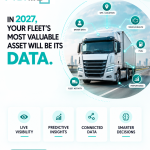


Fleet management is changing rapidly. Vehicles are no longer just assets that move people and goods from one location to another. Every trip generates valuable information about routes, fuel consumption, driver behavior, vehicle condition, maintenance, delivery performance, and operating costs.
For modern businesses, this data is becoming one of the most important resources for improving fleet performance.
In 2027, the businesses that get the most value from their fleets will not simply be the ones with the most vehicles or the latest tracking devices. They will be the ones that can collect, understand, and act on fleet data effectively.
This is where modern fleet technology and intelligent fleet management platforms become increasingly important.
From Vehicle Tracking to Fleet Intelligence
Traditional GPS tracking primarily focused on answering a simple question:
Where is the vehicle?
That information remains important, but modern fleet operations require much more.
Fleet managers now need to understand:
- Where vehicles are operating
- Which routes are being used
- How much fuel vehicles consume
- How long vehicles remain idle
- How drivers operate vehicles
- When vehicles require maintenance
- Which assets are underutilized
- Where operational costs are increasing
- How efficiently deliveries are being completed
- What vehicle data indicates about future problems
This shift moves fleet management from basic location tracking toward fleet intelligence.
A modern GPS Tracking Software platform can bring different sources of vehicle information together and turn raw data into information that fleet managers can use for everyday decisions.
Why Fleet Data Matters More Than Ever
Every vehicle generates data throughout its operating life.
A single vehicle can produce information about its location, speed, routes, fuel usage, engine condition, driver behavior, mileage, operating hours, and maintenance requirements.
When a company operates dozens or hundreds of vehicles, the amount of information generated becomes significant.
Without the right technology, this information can remain disconnected or difficult to interpret.
With a connected fleet platform, however, businesses can transform this information into actionable insights.
For example, instead of simply seeing that a vehicle traveled 150 kilometers, a fleet manager can examine:
- How efficiently the route was completed
- How much fuel was consumed
- How much time was spent idling
- Whether the driver made unnecessary stops
- Whether the vehicle requires maintenance
- Whether the route could be optimized
- Whether similar vehicles are performing differently
The value is not simply in collecting data.
The value comes from using the data to make better operational decisions.
1. Turn Fleet Data Into Intelligence
One of the biggest opportunities for modern fleet operators is transforming raw vehicle information into useful intelligence.
A fleet management platform can bring together information from GPS devices, vehicle diagnostics, sensors, driver activity, and operational systems.
Instead of managing separate pieces of information, businesses can create a more complete view of fleet operations.
For example, a fleet manager may discover that certain vehicles consistently consume more fuel than similar vehicles.
That information can lead to further investigation.
Is the problem related to:
- Driver behavior?
- Excessive idling?
- Vehicle condition?
- Route selection?
- Heavy loads?
- Poor maintenance?
Data helps businesses move from assumptions to evidence.
2. Understand Where Fleet Costs Are Going
Fuel is one of the major operating costs for many fleets.
However, fuel expenses are not always caused simply by the number of kilometers traveled.
Operational factors such as excessive idling, inefficient routes, aggressive driving, unnecessary trips, and vehicle condition can all affect overall efficiency.
Fleet data can help businesses identify these patterns.
For example, fleet managers can monitor:
Fuel consumption
Understand how vehicles are using fuel across different routes and operating conditions.
Idling
Identify vehicles spending excessive time with engines running while stationary.
Routes
Analyze whether vehicles are following efficient routes or regularly making unnecessary detours.
Driving patterns
Identify behaviors such as harsh acceleration and braking that may contribute to higher fuel consumption and vehicle wear.
When these patterns become visible, businesses can take targeted action rather than trying to reduce costs blindly.
3. Predict Maintenance Needs Before They Become Major Problems
Unexpected vehicle downtime can disrupt fleet operations.
A vehicle that suddenly becomes unavailable can affect deliveries, schedules, customers, drivers, and overall productivity.
Traditional maintenance approaches often rely on fixed schedules or responding after a problem appears.
Data-driven fleet management can provide another approach.
Vehicle information can help fleet managers monitor mileage, engine data, operating hours, diagnostic information, and other indicators that may signal maintenance requirements.
This supports a more proactive maintenance strategy.
Instead of waiting for a major problem, businesses can identify potential maintenance requirements earlier and schedule work around operational needs.
The goal is not simply to maintain vehicles more frequently.
The goal is to make maintenance more predictable and data-driven.
4. Improve Driver Performance
Drivers have a significant influence on fleet safety, efficiency, and operating costs.
Two vehicles of the same model can produce very different results depending on how they are driven.
Fleet data can help businesses understand driving behavior through indicators such as:
- Harsh braking
- Rapid acceleration
- Excessive idling
- Route deviations
- Driving patterns
- Vehicle utilization
This information can help fleet managers identify areas where additional driver training may be useful.
Rather than relying entirely on subjective observations, businesses can use actual operational data to identify patterns and measure improvement over time.
The objective should be to create a culture of safer, more efficient, and more responsible driving.
5. Make Route Decisions Using Real Data
Route planning has a direct impact on fleet productivity.
An inefficient route can increase travel time, fuel consumption, vehicle wear, and operating costs.
Fleet data provides businesses with historical and real-time information that can support better route decisions.
Managers can examine previous trips to identify:
- Frequently congested routes
- Unnecessary detours
- Repeated delays
- High-mileage journeys
- Inefficient delivery sequences
- Areas where vehicles spend excessive time
This information can then support better planning.
For businesses operating delivery fleets, logistics vehicles, service vehicles, or transportation fleets, even small improvements in route efficiency can become significant when repeated across hundreds or thousands of journeys.
6. Use Vehicle Health Data More Effectively
Location is only one part of the fleet picture.
Vehicle health can provide another important layer of information.
Depending on the available hardware and integrations, businesses can monitor different vehicle parameters and diagnostic information.
This can help fleet managers understand the condition and performance of individual assets.
For example, vehicle data may help identify unusual behavior that deserves inspection before it develops into a larger operational issue.
The combination of location data + vehicle data + operational data creates a much broader understanding of fleet performance.
7. Improve Asset Utilization
Not every vehicle in a fleet is necessarily being used efficiently.
Some vehicles may be heavily utilized while others remain inactive for long periods.
Without reliable data, fleet managers may have difficulty identifying these differences.
Fleet intelligence can help businesses understand:
- Vehicle utilization
- Operating hours
- Distance traveled
- Idle periods
- Trip frequency
- Asset availability
This information can support decisions about vehicle allocation and fleet size.
Instead of automatically adding more vehicles when demand increases, businesses can first examine whether existing assets are being fully utilized.
8. Build a More Data-Driven Fleet Culture
Technology alone does not create better fleet performance.
The real transformation happens when businesses begin using data as part of their everyday decision-making process.
For example, instead of asking:
“Why did fuel costs increase this month?”
a fleet manager can ask:
“Which vehicles, routes, and operating behaviors contributed to the increase?”
Instead of asking:
“Why was this vehicle unavailable?”
the team can examine maintenance and diagnostic data.
Instead of asking:
“Which drivers need additional training?”
management can identify recurring behavior patterns through operational data.
This changes fleet management from reactive problem-solving to informed decision-making.
The Future of Fleet Management Is Connected
The modern fleet is becoming part of a larger connected ecosystem.
GPS trackers, telematics devices, vehicle diagnostics, IoT sensors, mobile technology, cloud platforms, and analytics can work together to create a more complete operational picture.
The result is not simply more data.
It is connected intelligence.
A business can connect vehicle information with operational requirements and use the resulting insights to improve performance.
This is particularly valuable for companies managing:
- Logistics fleets
- Delivery vehicles
- FMCG transportation
- Construction fleets
- Rental vehicles
- Field service vehicles
- Passenger transportation
- Commercial vehicles
- Mixed business fleets
Each industry has different requirements, but the underlying principle remains similar:
Better data can support better decisions.
Why Cloud-Based Fleet Platforms Matter
As fleets become more data-driven, businesses also need technology that can scale with them.
Cloud-based fleet platforms can provide centralized access to fleet information without requiring businesses to rely entirely on local infrastructure.
A scalable Fleet Management System can help businesses manage vehicle information, tracking, alerts, maintenance, driver activity, and operational data from a centralized environment.
This becomes particularly important for businesses that are growing across multiple locations.
A connected cloud platform can provide a more consistent way to manage fleet operations as the number of vehicles, users, and data sources increases.
Data Can Also Become a Business Asset
Fleet data is not only useful for internal operations.
For technology businesses, tracking companies, and organizations building connected mobility solutions, fleet data can become part of a larger technology platform.
This is where White Label GPS Tracking Software can create opportunities for businesses that want to offer GPS and fleet technology under their own brand.
Instead of developing an entire tracking platform from scratch, businesses can use an established technology foundation and build their own customer-facing service around it.
This can include their own:
- Brand identity
- Customer experience
- Platform interface
- Business model
- Customer relationships
- Service offerings
The technology becomes the foundation, while the business builds its own market presence around it.
What Businesses Should Start Measuring
Preparing for a data-driven fleet future does not necessarily mean collecting every possible data point.
Businesses should focus on information that supports meaningful operational decisions.
Useful areas to monitor can include:
Fleet Utilization
How effectively are vehicles being used?
Fuel Efficiency
Where is fuel being consumed unnecessarily?
Driver Behavior
Which driving patterns affect safety, efficiency, or vehicle wear?
Maintenance
Which vehicles require attention and when?
Route Performance
Which routes consistently create delays or unnecessary mileage?
Vehicle Health
Are there indicators suggesting potential problems?
Operational Performance
How efficiently is the fleet supporting the wider business?
The objective should be to connect these measurements with business outcomes.
From Data Collection to Data Action
Collecting data is only the beginning.
The next stages are:
Collect → Analyze → Understand → Act → Measure
A business collects information from its vehicles.
It analyzes that information to identify patterns.
It understands what those patterns mean for operations.
It takes action.
Then it measures the results.
This continuous cycle is what can turn fleet data into a genuine operational advantage.
What Will Define Successful Fleets in 2027?
The fleet of the future will not be defined only by the number of vehicles it operates.
It will increasingly be defined by how effectively it uses the information generated by those vehicles.
Businesses that understand their fleet data can identify operational inefficiencies, monitor vehicle performance, support maintenance planning, improve driver management, and make more informed decisions.
The key shift is simple:
Vehicles generate the data. Technology turns it into intelligence. Businesses turn that intelligence into action.
Flotilla IoT: Your Technology. Your Brand. Your Platform.
At Flotilla IoT, we believe modern fleet management should go beyond simply watching vehicles move on a map.
The opportunity is to create a connected technology platform that helps businesses understand their fleets, manage operations, and turn vehicle data into actionable intelligence.
Whether your goal is to improve fleet operations or build your own branded GPS technology business, the right platform can provide the foundation for growth.
Your fleet is generating data every day. The next step is deciding what you do with it.
Ready to turn fleet data into intelligence?
Register and book a free demo with Flotilla IoT today.
Flotilla IoT — Your Technology. Your Brand. Your Platform.
Frequently Asked Questions
What is fleet data?
Fleet data is information generated by vehicles and fleet operations, including location, routes, fuel consumption, driver behavior, vehicle health, mileage, maintenance information, and operational performance.
Why is fleet data important?
Fleet data helps businesses understand how their vehicles are being used and identify opportunities to improve efficiency, safety, maintenance, and operational performance.
How can GPS tracking software help with fleet data?
GPS tracking software can collect and present information about vehicle locations, routes, movement, and other connected fleet data, allowing businesses to monitor operations and identify patterns.
Can fleet data help reduce fuel costs?
Yes. Businesses can analyze factors such as idling, routes, mileage, and driving behavior to identify operational patterns that may contribute to unnecessary fuel consumption.
Can fleet data support vehicle maintenance?
Yes. Depending on the available hardware and integrations, vehicle and diagnostic information can help businesses monitor maintenance requirements and identify potential issues earlier.
What is the future of fleet management?
Fleet management is increasingly moving toward connected, cloud-based, data-driven platforms that combine vehicle tracking, telematics, diagnostics, analytics, automation, and intelligent insights.
Is fleet data useful for GPS technology businesses?
Yes. Fleet data can form an important part of a broader GPS and telematics platform. Businesses can use white-label technology to create branded tracking and fleet management services without developing an entire platform from scratch.