
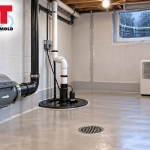

Your basement can have dry walls, clean gutters, and a working sump pump and still be exposed to a sewer backup.
That is because wastewater can enter through the plumbing. Protecting the foundation alone does not address that route.
To protect your basement from sewer backup damage, maintain the sewer line, keep clog-causing waste out of drains, and ask a licensed plumber whether a backwater valve suits your home. Add early alerts, move valuable items upstairs, and prepare a response plan.
The goal is to reduce both the chance of a backup and the damage if one happens.
Understand Why Sewage Can Enter Your Basement
A sewer backup occurs when wastewater cannot move away as intended and returns through a drain or plumbing fixture.
EPA identifies several causes of sewer overflows, including blockages, damaged pipes, and excess water entering the sewer system. Grease and certain household products, including some labeled “flushable,” can contribute to clogs. US EPA
This creates two questions for homeowners:
- Is there a problem in the pipe serving the property?
- Is the public sewer backing up or reaching capacity?
The answer matters. Clearing a household blockage and protecting against reverse flow from a public sewer are different jobs.
If your basement has flooded before, gather the old plumbing report, cleanup invoice, and photos. Ask what caused the event and whether that cause was actually resolved.
1. Have Recurring Drain Problems Investigated
A drain that works again after cleaning is encouraging. It does not tell you whether the pipe itself is sound.
Seattle Public Utilities recommends camera inspections to identify sewer-line problems and cleaning or repairs where needed. seattle.gov
Consider an assessment when backups repeat, the pipe’s condition is unknown, or you are planning to finish a basement that has flooded before.
Ask the plumber:
- What caused the blockage?
- Did the inspection cover the full accessible line?
- Is cleaning enough, or is a repair needed?
- What maintenance schedule fits the findings?
Request the video or written findings. This gives you a record to use when comparing repair options.
If the underlying defect remains, paying for repeated drain clearing may leave the same problem unresolved.
2. Keep Grease and Wipes Out of the Drains
Drain habits are one part of prevention you can control every day.
EPA advises keeping wipes and other non-flushable products out of toilets. These materials can damage plumbing and wastewater systems. US EPA
Use a simple household rule: toilets are for human waste and toilet paper.
In the kitchen, keep cooking fats and grease out of the sink. Let them cool, collect them in a suitable container, and follow local disposal guidance. Wipe greasy cookware before washing.
Make these habits clear to guests and tenants as well as family members. A small bathroom trash can and a short reminder near a rental property’s sink can make the rules easier to follow.
These steps reduce avoidable clogs. They do not eliminate risks from damaged pipes or problems elsewhere in the sewer system.
3. Ask About a Backwater Valve
A backwater valve allows wastewater to leave through a drain line while helping prevent reverse flow.
Portland’s plumbing guidance distinguishes this device from a drinking-water backflow prevention assembly. They protect different systems. Portland.gov
Have a licensed plumber evaluate the valve type, location, affected fixtures, permit requirements, and local code. Do not assume one layout is suitable for every house.
Understand what happens when it closes
When a backwater valve closes, water from fixtures that drain through it cannot leave through that route.
Toronto’s guidance warns that continued use of toilets, sinks, washing machines, and dishwashers during closure can cause water to back up inside the home. An alarm can help signal that the valve has closed. City of Toronto
Ask the installer to show you exactly which fixtures are affected and what everyone in the house should do.
Keep it accessible
A valve needs inspection and maintenance according to its manufacturer’s instructions. Avoid burying the access point under permanent flooring or storage.
An installed valve should become part of your maintenance plan, not something you forget beneath the basement floor.
4. Know What Your Sump Pump Can Protect
A typical foundation-drain sump pump removes collected groundwater. A backwater valve addresses reverse flow through a drainage pipe. City of Toronto
| Measure | Main purpose | Important limit |
|---|---|---|
| Sewer-line inspection and repair | Address problems in the property’s pipe | Does not resolve every public-sewer issue |
| Backwater valve | Help block reverse flow | Requires correct design and maintenance |
| Foundation-drain sump pump | Remove collected groundwater | Does not seal a sewer connection |
| Water alarm | Alert you to water at the sensor | Does not stop the source |
| Elevated storage | Reduce contact with shallow water | Does not make the basement floodproof |
If you have a sump pump, follow the manufacturer’s testing and maintenance guidance. Discuss backup power and approved discharge arrangements with a qualified installer.
Buying a larger pump before identifying the source can leave the actual sewer-backup risk unchanged.
5. Review Where Rainwater and Pump Discharge Go
Some properties have roof drains or sump pumps connected to a sanitary sewer.
Onondaga County’s sewer guidance explains that these connections can add water to the system and contribute to capacity problems. Water Environment Protection
Ask your plumber or sewer authority to check the arrangement. Any changes should follow local requirements and avoid sending water onto neighboring property or back toward your foundation.
Also keep gutters and surface drainage in your prevention plan. They address water around the house, while sewer protection addresses water arriving through the pipes.
Treat these as separate checks. A clean gutter is not proof that a basement drain is protected.
6. Reduce What a Backup Can Damage
Walk through the basement and ask: What would be hardest to replace if wastewater reached the floor?
Move family photos, important documents, backup drives, and irreplaceable items upstairs when possible.
For items that remain:
- Use sturdy shelving to keep them off the floor.
- Replace cardboard boxes with suitable lidded containers.
- Keep storage away from drains and equipment access points.
- Photograph valuable belongings and retain the inventory elsewhere.
Do not assume an ordinary plastic container is watertight.
FEMA recommends documenting belongings to support insurance claims. fema.gov A storage review also helps you decide what should leave the basement before the next storm.
If you plan to renovate, assess sewer protection before installing costly finishes.
7. Add an Alert You Will Actually Receive
A water sensor can provide an early warning when water reaches its location. Choose placement based on likely entry points and the device instructions.
Before relying on one, check:
- Whether it sounds locally or sends a phone alert.
- What happens if power or Wi-Fi fails.
- Whether it reports a low battery.
- Who responds when you are away.
Test the notification, not just the sensor.
For a rental or rarely used basement, write down who receives the alert and who calls for help. An alarm offers limited value if nobody knows what to do next.
8. Check Your Insurance Before a Backup
The National Association of Insurance Commissioners lists sewer backup among optional homeowners insurance additions. Do not assume it is included because the policy mentions water damage. NAIC
Ask your insurer:
- Do I have sewer or water-backup coverage?
- What limit and deductible apply?
- Are contents, cleanup, and repairs included?
- How does the policy treat sump-pump failure?
- What records would a claim require?
Insurance helps manage financial exposure. It does not replace maintenance or physical protection.
Build a Simple Prevention Schedule
Use this as a starting checklist, then follow the inspection intervals recommended for your equipment and property.
This week: Move valuable items, locate plumbing records, check insurance, and save emergency contacts.
Before major rain is forecast: Confirm alarms work, keep valve and pump access clear, and review the household response plan.
At scheduled service: Follow valve and pump maintenance instructions. Investigate repeat drainage problems and keep records of completed work.
Give each task an owner and a date. “Check the basement sometime” is easy to forget.
What If Sewage Starts Coming Up?
Stop using toilets and other water appliances. Keep people and pets out of the affected area, and contact a plumber and the appropriate sewer authority. Seattle’s guidance recommends these steps and documenting damage. seattle.gov
Do not enter standing water to reach a breaker panel. CDC advises calling an electrician if reaching the main power switch requires entering water. CDC
Once the source is addressed, contaminated rooms still need assessment and cleanup.
For properties in Cleveland and surrounding areas, Water Extraction Team provides sewage cleanup services. Ask about the cleanup scope and what separate plumbing repairs may be required. WET
Key Takeaways
Protecting your basement starts with knowing how wastewater leaves your home and what could send it back.
Prioritize the cause of previous backups, maintain the plumbing, evaluate a suitable backwater valve, and reduce what is stored at floor level.
Your next step: Arrange a plumbing assessment if you cannot explain what caused a past backup or which fixtures your current protection covers.
FAQs
Can a sump pump prevent sewer backup?
A typical foundation-drain sump pump handles collected groundwater. It does not block wastewater from returning through a sewer-connected drain. Ask a plumber to identify which type of water entry your basement is exposed to.
Does every basement need a backwater valve?
The need depends on the plumbing layout, fixture elevations, sewer conditions, and local code. Have a licensed plumber assess the property rather than choosing a device based only on the presence of a basement.
How often should a backwater valve be checked?
Follow the manufacturer’s instructions and your installer’s guidance. Keep the access point clear, record service dates, and ask whether operating conditions call for more frequent inspection.
Can sewer backup happen without heavy rain?
Yes. A blockage or damaged sewer pipe can interfere with drainage even during dry weather. Rain is one possible factor, not a requirement for a backup. US EPA
Will basement waterproofing stop sewage from a floor drain?
Wall and foundation treatments do not close a wastewater route through plumbing. Have the drain connection assessed and address the sewer-related cause separately from foundation seepage.
What should I do after a small backup that drains away?
Keep the area out of use until it is assessed. Draining away does not show that affected materials are clean or that the cause has been fixed. Record what happened and arrange the appropriate plumbing and cleanup follow-up.