
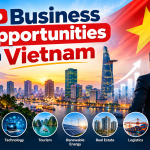





Vietnam is attracting growing attention from entrepreneurs, startups, and international investors looking for business opportunities in Southeast Asia. Its expanding consumer market, developing infrastructure, digital transformation, and participation in international trade make it an appealing destination for businesses across multiple industries. In 2026, understanding emerging market trends can help entrepreneurs identify promising sectors and develop competitive business strategies.
From digital commerce and tourism to renewable energy and agricultural innovation, there are many potential ways to enter the Vietnamese market. However, choosing the right industry requires careful research, financial planning, and an understanding of local customer preferences. Exploring the Top Business Opportunities in Vietnam can help investors and business owners identify areas with potential for sustainable growth.
1. E-commerce and Digital Retail
E-commerce continues to offer opportunities for entrepreneurs as Vietnamese consumers increasingly use online platforms to research products, compare prices, and shop. Businesses can reach customers through online marketplaces, independent websites, social commerce, and mobile applications without necessarily investing in expensive physical retail locations.
Popular business ideas include fashion stores, beauty products, home accessories, consumer electronics, specialty foods, and environmentally conscious products. Entrepreneurs can also explore niche markets by offering products designed for specific customer groups.
To succeed, businesses should focus on product quality, competitive pricing, efficient delivery, and customer service. Social media marketing, search engine optimization, and targeted advertising can help attract potential customers. Before launching an online store, entrepreneurs should research competitors, supplier reliability, platform fees, and customer demand.
2. Tourism, Travel, and Hospitality
Vietnam's beaches, mountains, cultural attractions, historical destinations, and food experiences create opportunities for tourism-related businesses. Entrepreneurs can develop services for domestic travelers, international visitors, business travelers, and customers interested in specialized experiences.
Potential ventures include boutique accommodation, homestays, guided cultural tours, culinary experiences, adventure tourism, wellness retreats, and travel planning services. Businesses that combine local knowledge with convenient digital booking can create distinctive customer experiences.
Sustainable tourism is another area worth exploring. Visitors may be interested in locally operated experiences, nature-based activities, and businesses that support regional communities.
Before investing, entrepreneurs should evaluate the location, seasonal demand, accommodation regulations, licensing requirements, staffing expenses, and marketing costs. Building partnerships with local guides, transport providers, restaurants, and accommodation operators can help establish a stronger tourism business.
3. Renewable Energy and Environmental Solutions
Energy efficiency and environmental sustainability are increasingly important considerations for businesses operating in Vietnam. This creates potential opportunities for entrepreneurs who can provide practical solutions to commercial customers, manufacturers, property developers, and agricultural businesses.
Business ideas include solar energy installation and maintenance, energy-efficiency consulting, recycling services, waste management, sustainable packaging, and environmentally friendly building solutions.
Entrepreneurs with technical expertise can help businesses evaluate energy consumption and identify ways to reduce operating expenses. Others may enter the sector through equipment distribution, project support, maintenance contracts, or consulting services.
Renewable energy projects may involve substantial upfront investment and complex regulatory requirements. Therefore, businesses should examine current government policies, permitting rules, customer demand, equipment costs, and project profitability before committing capital.
4. Manufacturing and Supply Chain Services
Vietnam's manufacturing sector offers opportunities for businesses supporting domestic producers and international supply chains. Industries such as electronics, textiles, furniture, packaging, and food processing can create demand for specialized products and professional services.
Entrepreneurs do not necessarily need to establish a large manufacturing facility to enter this market. They can consider industrial equipment distribution, packaging supply, quality inspection, factory maintenance, logistics coordination, and sourcing services.
Businesses that provide reliable service, consistent quality, and competitive pricing may be able to build long-term relationships with manufacturers. Understanding customer specifications and industry standards is particularly important when serving export-oriented companies.
Before starting a manufacturing-related business, evaluate access to industrial areas, transportation infrastructure, skilled workers, suppliers, and potential customers. Entrepreneurs should also understand applicable product standards, customs procedures, contracts, and tax obligations.
5. Agriculture, Food Processing, and Agritech
Agriculture and food-related industries remain important to Vietnam's economy and provide opportunities for entrepreneurs interested in production, processing, distribution, and technology.
Vietnam's agricultural products include coffee, rice, seafood, fruit, and other food commodities. Businesses can explore opportunities to transform raw materials into higher-value products, improve storage and distribution, or supply specialized products to domestic and international customers.
Potential business ideas include packaged food production, specialty coffee brands, dried fruit, frozen food, cold-chain logistics, agricultural equipment, and digital tools for farm management.
Agricultural technology can also help farmers improve efficiency through smart irrigation, crop monitoring, soil analysis, and better supply chain management. Businesses that solve practical problems for farmers and food producers may find opportunities to build long-term customer relationships.
Entrepreneurs should consider food safety standards, product traceability, seasonal supply, transportation expenses, export regulations, and access to reliable suppliers. Establishing partnerships with farmers, processors, retailers, and distributors can improve business stability.
6. Education and Professional Training
Education and skills development provide another potential business opportunity in Vietnam. As businesses adapt to digital technologies and changing workplace requirements, individuals may seek practical training to improve their career prospects.
Entrepreneurs can consider English language education, business communication, coding classes, digital marketing training, professional certification preparation, and corporate training programs.
Online learning platforms and hybrid teaching models may help businesses reach students beyond major cities. Specialized courses designed around measurable skills and employer requirements can also provide a competitive advantage.
To establish a successful education business, entrepreneurs should identify a clear target audience, develop high-quality learning materials, recruit qualified instructors, and establish a sustainable pricing model. They should also verify any licensing or accreditation requirements relevant to their educational services.
7. Healthcare Support and Wellness Services
Growing consumer interest in personal well-being creates potential opportunities in wellness, fitness, preventive lifestyle services, and nonclinical healthcare support. Entrepreneurs can investigate fitness studios, healthy meal services, wellness retreats, workplace wellness programs, and digital platforms that support healthy routines.
Businesses may also find opportunities in healthcare administration technology, appointment management, and other support services for licensed healthcare providers.
This sector requires careful attention to customer safety, professional qualifications, data protection, and applicable regulations. Services involving medical diagnosis, treatment, pharmaceuticals, or other regulated activities may require specific approvals and appropriately licensed professionals.
A successful business should prioritize service quality, trust, customer privacy, and transparent pricing rather than relying only on growing consumer interest.
How to Choose the Best Business to Start in Vietnam in 2026
Identifying a promising industry is only the first step. Entrepreneurs need to determine whether their chosen business can attract customers and generate sustainable revenue.
Conduct market research: Study customer preferences, competitor offerings, market prices, and unmet needs in the target location.
Evaluate startup capital: Estimate equipment, rent, staffing, marketing, inventory, technology, and working capital requirements.
Develop a business plan: Define your target audience, pricing strategy, sales channels, operating model, and financial projections.
Understand legal requirements: Investigate company registration, foreign investment conditions, taxes, employment rules, and industry-specific licenses.
Test demand before scaling: Consider a small launch, pilot service, or limited product range before making a significant investment.
Build local partnerships: Work with reliable suppliers, distributors, service providers, and professional advisers who understand the Vietnamese market.
Foreign investors should verify the latest rules for their chosen business activity, as market-entry conditions and licensing requirements can vary by sector.
Conclusion
Vietnam's developing economy offers entrepreneurs a range of business possibilities in 2026. E-commerce, tourism, renewable energy, manufacturing support, agriculture, education, and wellness services are among the sectors worth researching.
The best opportunity will depend on available capital, professional experience, customer demand, competitive conditions, and regulatory requirements. Rather than choosing an industry based on popularity alone, entrepreneurs should focus on solving genuine customer problems and creating a business model that can remain profitable over time.
For investors and entrepreneurs seeking the Top Business Opportunities in Vietnam, careful market research, financial preparation, and strong local partnerships can provide a solid foundation for entering the market and pursuing long-term business growth.