

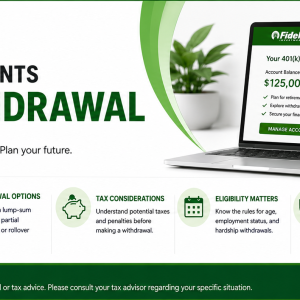


A Fidelity 401(k) withdrawal is money taken out of a workplace retirement plan administered by Fidelity. Whether you can withdraw, how much you can take, and what it cost in taxes will depend on your employer’s plan rules, your age, and why you need the money.
Fidelity often handles the plan’s website and transactions, but your employer’s plan document sets the available options. Check your plan details in NetBenefits before requesting a distribution.
What does it mean to withdraw from a Fidelity 401(k)?
A withdrawal, also called a distribution, moves money from your 401(k) to you. Unlike a loan, a withdrawal usually does not have to be repaid. But it can reduce the money invested for retirement and may result in income taxes or an additional early-withdrawal tax.
Traditional 401(k) withdrawals are generally taxable as ordinary income. A withdrawal before age 59½ may also be subject to a 10% additional tax unless an exception applies.
Fidelity 401(k) loans and withdrawals
A 401(k) loan lets you borrow from your plan balance and repay the loan, usually with interest, under the plan’s terms. A withdrawal permanently removes money from the account unless you qualify to roll it over.
Plans may offer loans, hardship withdrawals, in-service withdrawals, or distributions after you leave your job. They do not all offer the same choices. Fidelity explains that plan rules determine whether borrowing is available and how much you may borrow.
Before choosing, consider:
- Whether your plan permits the transaction
- The repayment schedule and consequences if you leave your job with a loan outstanding
- Taxes and any early-distribution tax
- The effect of removing money from retirement investments
What is a Fidelity 401(k) cash-out?
A cash-out means taking some or all of your vested 401(k) balance as money paid to you. It may be an option after leaving an employer, but it is not always the only option. Depending on the plan and your circumstances, you may be able to leave the money in the plan, roll it into another eligible retirement plan or IRA, or take a distribution.
A cash-out can create a tax bill. If a taxable eligible rollover distribution is paid to you instead of being directly rolled over, mandatory federal withholding generally applies. The IRS says you generally have 60 days to roll over a distribution paid to you, though withholding can mean you need to replace some money from another source to roll over the full amount.
What is a Fidelity 401(k) hardship withdrawal?
A hardship withdrawal may be available when you have an immediate and heavy financial need and meet your plan’s requirements. The plan may ask you to explain the expense or provide supporting information. The amount is generally limited to what is needed to address the hardship, as defined by the plan.
A hardship withdrawal is not the same as a penalty exemption. Previously untaxed money is generally included in taxable income, and the 10% additional tax may apply if you are under 59½ and no exception fits. Hardship distributions generally cannot be repaid to the plan or rolled over.
What is an early withdrawal from a Fidelity 401(k)?
An early withdrawal is generally a taxable distribution from a retirement plan before age 59½. It may be subject to ordinary income tax and a 10% additional tax, unless you meet an exception. The IRS lists exceptions for certain situations, but the details depend on the type of plan and distribution.
Reaching age 59½ generally removes the 10% additional tax on eligible distributions, but it does not automatically mean your current employer’s plan allows you to withdraw money while you still work there. The plan’s in-service withdrawal rules still matter.
Fidelity 401(k) withdrawal at age 59½
At age 59½, a qualifying withdrawal generally avoids the 10% early-distribution tax. Traditional 401(k) money may still be subject to income tax, and your employer’s plan may limit when you can take an in-service distribution.
If you have left your job, your plan may provide more distribution choices. Check whether the money is vested and whether the plan allows a partial withdrawal, full cash-out, or rollover.
How to withdraw from a Fidelity 401(k)
To check how to withdraw from your Fidelity 401(k):
- Sign in to NetBenefits and select your workplace retirement plan.
- Review the plan’s withdrawal and loan options.
- Check eligibility, fees, tax withholding, and any documents you must provide.
- Choose the distribution type and amount, if eligible.
- Review the tax consequences before submitting your request.
If an option is missing or the rules are unclear, contact your plan administrator or Fidelity’s workplace plan service team. The employer’s plan document controls the available choices.
Fidelity 401(k) withdrawal terms and conditions
Fidelity 401(k) terms can differ because employers choose plan features and eligibility rules. Before requesting money, confirm:
- Whether you are eligible based on age, employment status, or another qualifying event
- Whether the money is vested
- Whether the plan permits hardship or in-service withdrawals
- Any minimum or maximum amounts, fees, or documentation
- How the distribution will be taxed and reported
A Fidelity Investments 401(k) withdrawal is therefore not governed by one universal set of terms. Your plan’s current rules are the key reference.
Fidelity 401(k) withdrawal phone number
For workplace 401(k) plan help, Fidelity lists 800-835-5095. If you work for a tax-exempt organization, Fidelity lists 800-343-0860. Check Fidelity’s current contact page or NetBenefits for the right contact option for your plan.
Frequently asked questions
Can I withdraw money from my Fidelity 401(k) while still employed?
Possibly. It depends on your employer’s plan and the reason for the request. Some plans permit certain in-service withdrawals or hardship distributions; others restrict them.
Is a hardship withdrawal from Fidelity automatically penalty-free?
No. A hardship withdrawal may still be subject to the 10% additional tax if you are under 59½ and do not qualify for a separate exception.
Is a Fidelity 401(k) withdrawal taxable?
Traditional 401(k) distributions are generally taxable as income. The amount withheld at the time of payment may not equal your final tax liability.
Is a 401(k) loan better than a withdrawal?
It depends on your plan, finances, and ability to repay. A loan requires repayment and can have consequences if you leave your employer; a withdrawal usually does not have to be repaid but may trigger taxes and reduce retirement savings.
Does Fidelity decide whether I can withdraw?
Fidelity may process the request, but your employer’s plan rules determine which withdrawals are available and when you qualify.
Conclusion
A Fidelity 401(k) withdrawal can provide access to retirement savings when you need money, but it can also affect your taxes and long-term financial security. Understanding the differences between a cash-out, hardship withdrawal, early withdrawal, and 401(k) loan can help you make an informed decision.
Before requesting a distribution, review your employer's plan rules, verify your eligibility, and estimate the potential tax consequences. Use Fidelity's official website and NetBenefits portal for account-specific information rather than relying on general withdrawal rules alone.