
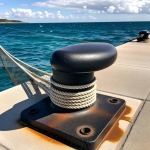

The future of maritime infrastructure is being defined by a transition toward smarter, more sustainable, and resilient components. The traditional marine bollard, historically a static piece of metal, is at the forefront of this transformation, incorporating advanced corrosion protection, smart monitoring technologies, and modular designs to meet the evolving demands of large-scale ports and offshore terminals. These technological integrations are enhancing safety, extending service life, and fundamentally changing how we approach the securement of a bollard in ship operations.
One of the most significant advancements lies in corrosion resistance. Because the lifespan and reliability of any marine bollard are limited by its ability to withstand constant exposure to saltwater and atmospheric degradation, enhanced protection systems are essential. Moving beyond standard paint or galvanizing, cutting-edge bollards now often feature multi-barrier protection systems. A prime example is the application of Thermal Spray Aluminum (TSA), where molten aluminum is sprayed onto the bollard surface, creating an incredibly dense, sacrificial, and durable protective layer. This is then typically followed by specialized, multi-layer epoxy and polyurethane topcoats, resulting in a coating system designed to last decades without major refurbishment, even in the highly aggressive splash zones of offshore environments. Furthermore, for bollards that are constantly submerged or integrated into major steel structures, cathodic protection systems (either sacrificial anodes or impressed current systems) are being integrated into the foundation design, chemically halting corrosion and massively extending the bollard's structural life.
The second major area of innovation is the integration of smart monitoring technologies. A traditional bollard in ship mooring scenario provided no real-time feedback; operators could only estimate line tension based on visual observation. Modern custom bollards are now being equipped with integrated strain gauges and load sensors embedded within the body or base plate. These sensors provide continuous, real-time data on the line tension and lead angle. This information is instantly transmitted to the terminal's control center, offering several critical benefits:
- Enhanced Safety:Operators can immediately identify if a line is approaching or exceeding its Safe Working Load (SWL), allowing for proactive adjustments to prevent line breakage or catastrophic bollard failure.
- Optimized Operations:Real-time data allows for more precise mooring procedures, ensuring lines are tensioned correctly and equally distributed among the marine bollard
- Predictive Maintenance:By tracking loading cycles and peak stresses over time, facility managers can accurately gauge the structural fatigue of the bollard, moving from reactive maintenance to a more efficient, predictive schedule.
Looking forward, the concept of a modular and retrofit-friendly marine bollard is gaining traction. As vessel sizes and environmental criteria change, ports need infrastructure that can be easily upgraded. Modular designs allow for the rapid replacement of bollard heads or load-bearing components without requiring extensive demolition or reconstruction of the entire foundation. This flexibility is critical for maintaining compliance with ever-stricter safety standards and accommodating new generations of larger vessels. Furthermore, advanced metallurgy, including the use of duplex stainless steel and other high-performance alloys in specific wear zones, ensures that even the most vulnerable parts of the bollard in ship interface can withstand exceptional abrasion and corrosion for a longer duration. These technological leaps are transforming the bollard from a static fixture into a dynamic, data-generating safety asset, ensuring that port operations remain safe, efficient, and technologically prepared for the challenges of the 21st-century global supply chain.