In Q1 2026, Samsung Electronics finalized DRAM contracts with price increases exceeding 100%—a dramatic escalation from the 70% projection just weeks earlier. Even Apple Inc. reportedly accepted the hike to secure LPDDR5X supply for its upcoming devices.
The driver is clear: AI infrastructure.
Hyperscalers such as NVIDIA, Microsoft, and Google are absorbing wafer capacity for HBM production, creating a structural shortage of conventional DRAM and NAND. Analysts at Gartner and IDC project AI da... moreIn Q1 2026, Samsung Electronics finalized DRAM contracts with price increases exceeding 100%—a dramatic escalation from the 70% projection just weeks earlier. Even Apple Inc. reportedly accepted the hike to secure LPDDR5X supply for its upcoming devices.
The driver is clear: AI infrastructure.
Hyperscalers such as NVIDIA, Microsoft, and Google are absorbing wafer capacity for HBM production, creating a structural shortage of conventional DRAM and NAND. Analysts at Gartner and IDC project AI data centers could consume up to 70% of high-end DRAM output in 2026.
Key impacts:
Generic DRAM and NAND contract prices have doubled.
DDR4 spot prices have surged faster than DDR5 due to production reallocation.
Budget PCs are disappearing as memory now represents up to 35% of build cost.
The secondary market has shifted from depreciation to liquidity opportunity.
The 2026 “Rampocalypse” is not cyclical—it is structural. When memory pricing doubles, hardware economics reset across the digital economy.
Inference is becoming the primary cost center of AI, and NVIDIA’s Feynman roadmap suggests a shift from training-centric GPUs toward latency-optimized, inference-scale systems.
As real-time agents, copilots, and edge deployments grow, inference sovereignty—where compute is located, how fast it responds, and who controls the hardware—will define the next phase of AI infrastructure.
With NVIDIA GTC 2026 approaching, the key question is whether NVIDIA will formally introduce a new class of infere... moreInference is becoming the primary cost center of AI, and NVIDIA’s Feynman roadmap suggests a shift from training-centric GPUs toward latency-optimized, inference-scale systems.
As real-time agents, copilots, and edge deployments grow, inference sovereignty—where compute is located, how fast it responds, and who controls the hardware—will define the next phase of AI infrastructure.
With NVIDIA GTC 2026 approaching, the key question is whether NVIDIA will formally introduce a new class of inference-focused silicon and fabric to complement its training platforms.
As AI adoption accelerates, organizations are constantly upgrading or decommissioning GPU infrastructure. But selling GPUs in bulk—especially enterprise and data-center hardware—is very different from selling individual consumer cards.
This practical guide breaks down the main options for selling GPUs at scale and the trade-offs involved.
Key takeaways:
Consumer marketplaces like eBay or Amazon can reach many buyers, but they come with fees, logistics challenges, and fraud risks when dealing ... moreAs AI adoption accelerates, organizations are constantly upgrading or decommissioning GPU infrastructure. But selling GPUs in bulk—especially enterprise and data-center hardware—is very different from selling individual consumer cards.
This practical guide breaks down the main options for selling GPUs at scale and the trade-offs involved.
Key takeaways:
Consumer marketplaces like eBay or Amazon can reach many buyers, but they come with fees, logistics challenges, and fraud risks when dealing with large quantities of high-value hardware.
Enterprise hardware buyers and IT asset disposition (ITAD) companies are often the most efficient route for large GPU lots because they handle logistics, testing, and payment processes.
Selling complete systems or clusters can sometimes yield better outcomes than parting out individual GPUs.
Secure transactions are critical—large GPU deals typically rely on methods like bank wires, corporate purchase orders, or structured contracts to reduce fraud risk.
The guide ultimately helps data centers, AI startups, miners, and enterprises determine the best channel for selling surplus GPU hardware quickly, safely, and at fair market value.
**Where to Sell GPUs for Cash in 2025: Maximizing Returns on Surplus Hardware**
As GPU demand continues to be driven by AI training, inference, and high-performance computing, the secondary GPU market remains highly active. This article, *“10 Best Places to Sell GPU for Cash for the Most Returns,”* provides a structured comparison of the most common GPU resale channels—including ITAD companies, specialized hardware buyers, marketplaces, and peer-to-peer platforms—highlighting the trade-offs bet... more**Where to Sell GPUs for Cash in 2025: Maximizing Returns on Surplus Hardware**
As GPU demand continues to be driven by AI training, inference, and high-performance computing, the secondary GPU market remains highly active. This article, *“10 Best Places to Sell GPU for Cash for the Most Returns,”* provides a structured comparison of the most common GPU resale channels—including ITAD companies, specialized hardware buyers, marketplaces, and peer-to-peer platforms—highlighting the trade-offs between price, risk, speed, and transaction scale.
Rather than focusing solely on headline prices, the blog breaks down **real-world factors that affect net returns**, such as buyer reliability, payment terms, data center–grade GPU acceptance (A100, H100, RTX 4090, etc.), bulk handling capabilities, and logistics support. It explains why enterprise sellers, AI startups, and data centers often achieve better outcomes by working with specialized GPU buyers instead of consumer marketplaces, especially when selling in volume.
If you are managing surplus GPUs, upgrading AI infrastructure, or liquidating unused hardware, this guide offers a practical framework to **choose the right selling channel based on your priorities—maximum cash value, lowest risk, or fastest turnaround**.
Sell RAM at the Best Market Value — DDR5, DDR4, and Server Memory
The global memory market is experiencing strong demand due to rapid growth in AI infrastructure, cloud computing, and data center modernization. High-performance RAM, especially DDR5, DDR4, and enterprise-grade server memory, continues to be actively traded in the secondary market.
If your business, data center, or IT operation has surplus or decommissioned RAM, this is an excellent opportunity to convert unused inventory into c... moreSell RAM at the Best Market Value — DDR5, DDR4, and Server Memory
The global memory market is experiencing strong demand due to rapid growth in AI infrastructure, cloud computing, and data center modernization. High-performance RAM, especially DDR5, DDR4, and enterprise-grade server memory, continues to be actively traded in the secondary market.
If your business, data center, or IT operation has surplus or decommissioned RAM, this is an excellent opportunity to convert unused inventory into capital.
BuySellRam.com specializes in bulk RAM purchasing and works directly with enterprises to maximize the value of excess memory assets.
Why Choose BuySellRam.com
BuySellRam.com focuses on professional, business-to-business transactions and understands enterprise memory valuation.
Key advantages include:
Bulk and enterprise-level purchasing
Competitive pricing based on real market demand
Experience with AI, server, and data center hardware
Secure and efficient transaction process
Commitment to sustainable IT reuse and recycling
Unlock Value from Idle Memory Assets
Unused RAM stored in warehouses or data centers represents locked capital and ongoing depreciation. Selling surplus memory can help offset upgrade costs, improve IT asset recovery returns, and support responsible reuse of enterprise technology.
If you have DDR5, DDR4, or server-grade RAM available, request a quote today.
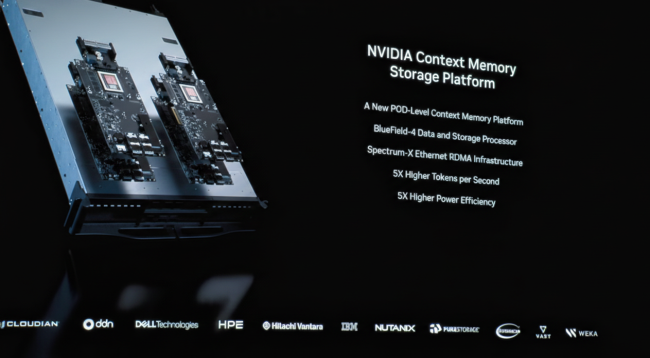
NVIDIA’s Inference Context Memory Storage Platform, announced at CES 2026, marks a major shift in how AI inference is architected. Instead of forcing massive KV caches into limited GPU HBM, NVIDIA formalizes a hierarchical memory model that spans GPU HBM, CPU memory, cluster-level shared context, and persistent NVMe SSD storage.
This enables longer-context and multi-agent inference by keeping the most active KV data in HBM while offloading less frequently used context to NVMe—expanding capacity... moreNVIDIA’s Inference Context Memory Storage Platform, announced at CES 2026, marks a major shift in how AI inference is architected. Instead of forcing massive KV caches into limited GPU HBM, NVIDIA formalizes a hierarchical memory model that spans GPU HBM, CPU memory, cluster-level shared context, and persistent NVMe SSD storage.
This enables longer-context and multi-agent inference by keeping the most active KV data in HBM while offloading less frequently used context to NVMe—expanding capacity without sacrificing performance. This shift also has implications for AI infrastructure procurement and the secondary GPU/DRAM market, as demand moves toward higher bandwidth memory and context-centric architectures.
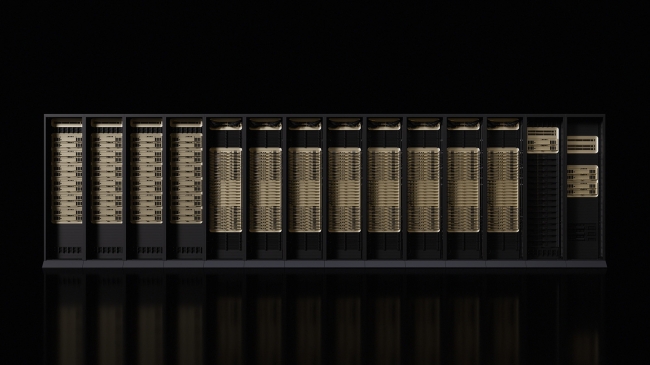
NVIDIA used CES 2026 to signal a strategic shift in AI infrastructure. Instead of launching a new consumer GPU, the company unveiled Vera Rubin, a rack-scale AI supercomputing platform designed as a fully integrated system.
Rubin combines GPUs, CPUs, interconnects, networking, storage, and security into a single co-designed architecture. NVIDIA claims up to 5× inference performance, 3.5× training performa... morehttps://www.buysellram.com/blog/nvidias-vera-rubin-the-beginning-of-ai-as-infrastructure/
NVIDIA used CES 2026 to signal a strategic shift in AI infrastructure. Instead of launching a new consumer GPU, the company unveiled Vera Rubin, a rack-scale AI supercomputing platform designed as a fully integrated system.
Rubin combines GPUs, CPUs, interconnects, networking, storage, and security into a single co-designed architecture. NVIDIA claims up to 5× inference performance, 3.5× training performance, and 10× lower inference cost per token compared to Blackwell, achieved through system-level optimization rather than standalone chip speed.
With production already underway and major cloud providers set to deploy Rubin in late 2026, NVIDIA is moving AI from GPU clusters toward industrialized, factory-style infrastructure—reshaping both primary deployments and secondary hardware markets.