
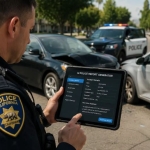





Search "police report generator" online after a crash, and it's easy to find tools that promise to produce a police-style document in minutes. For someone stressed about an accident, confused about the process, or missing an official report, the temptation to use one of these tools can be real. But using AI to create a document that looks like an official police report, and presenting it as one, can seriously damage your claim and expose you to legal risk.
If you're unsure how to document your accident properly, a Bakersfield car accident lawyer can walk you through what evidence actually helps your case and how to get it the right way.
The Difference Between Documentation and Fabrication
There is an important line between using AI to help organize true information you experienced, and using AI to generate a document meant to resemble an official police report. The first can be a reasonable personal tool. The second is a problem, regardless of intent.
- Legitimate use: Using an app to help you write down what happened, in your own words, shortly after a crash
- Legitimate use: Organizing photos, timestamps, and notes into a personal file for your attorney
- Problematic use: Generating a document formatted to look like an official police report, complete with fabricated details, an "officer's" assessment, or a citation that never happened
- Problematic use: Presenting an AI-generated summary to an insurance company as though a law enforcement agency created it
The difference is not about the technology. It's about honesty and what the document claims to be.
Why This Matters So Much in Insurance Claims
Insurance companies rely heavily on official police reports because they come from a neutral, trained third party with no financial stake in the outcome. An officer who responds to a crash typically:
- Interviews drivers and witnesses at or near the scene
- Documents vehicle positions, damage, and road conditions
- Notes weather, lighting, and traffic control devices
- Issues citations when appropriate
- Often provides an opinion on how the crash occurred
That combination of firsthand observation and law enforcement authority is exactly what an AI tool cannot replicate. An AI-generated document reflects only what a user typed into it, whether accurate or not, and carries no independent verification.
What Can Go Wrong If You Submit a Fabricated Document
Presenting a fabricated or AI-generated "report" as if it were official can create serious problems:
- Insurance fraud concerns. Knowingly submitting a false or misleading document to an insurance company in support of a claim can expose you to civil and potentially criminal consequences, separate from and far more serious than any issue with the underlying accident.
- Claim denial. Once an insurer discovers a document is not authentic, they may deny the entire claim, even the legitimate parts.
- Loss of credibility. If your claim proceeds to litigation, a jury that learns you submitted a fake document may discount everything else you say, even when the rest of your claim is completely valid.
- Delay. Verification issues can slow down a claim that might otherwise have resolved quickly.
None of this is worth the shortcut. A missing police report is a solvable problem. A fabricated one creates a much bigger one.
What To Do Instead When You Don't Have a Police Report
Not every crash results in an officer responding to the scene, especially minor collisions where drivers exchange information and part ways. If you find yourself without an official report, there are legitimate paths forward:
- Check whether you can still file one. Many law enforcement agencies allow drivers to file a report after the fact, sometimes within a set number of days, even without an officer at the scene. Contact the relevant department directly to ask about their process and any applicable deadline.
- Request the report if one exists. Sometimes a report was made, but you simply don't have a copy. Agencies typically have a process, often involving a small fee, to request a certified copy.
- Lean on other evidence. Photos, witness contact information, the other driver's insurance details, medical records, and your own written account, created honestly and promptly, can all support your claim.
- Let an attorney request records for you. A lawyer can often obtain reports and other official records more efficiently than an individual can, and can identify what additional evidence your specific claim needs.
How to Use AI Responsibly After an Accident
AI tools are not inherently a problem, and some can genuinely help you organize your own experience:
- Drafting a personal timeline of the crash and what happened afterward
- Organizing photos and notes into a clear file
- Helping you write down details while your memory is fresh
- Preparing questions for your doctor, insurance adjuster, or attorney
The key is transparency. Anything AI helps you create should be clearly understood, by you and anyone you share it with, as your own personal account, not an official record from law enforcement.
How Insurers Catch Fabricated Reports
Insurance adjusters don't simply accept whatever document is submitted to them. Standard practice includes verifying a police report directly with the issuing agency, checking report numbers, and cross-referencing details. A document that cannot be verified this way is a significant red flag, and it can trigger a broader investigation into the entire claim, not just the questionable document.
Building a Claim on Solid Ground
A strong car accident claim doesn't need shortcuts. It needs real evidence, gathered honestly:
- An actual police or CHP report, obtained through the proper channel, if one exists
- Photos and video from the scene and afterward
- Witness statements collected honestly
- Complete medical records documenting your injuries
- Repair estimates and property damage documentation
- Your own honest, timely account of the crash
This kind of evidence holds up under scrutiny from an insurance adjuster, opposing counsel, or a jury, which is exactly what a fabricated document cannot do.
Talk to a Lawyer About Documenting Your Claim the Right Way
If you're facing a car accident claim without a police report, or you're not sure what documentation you need, the answer is not a tool that generates a fake one. A Bakersfield car accident lawyer can help you request real records, gather legitimate evidence, and build a claim that will actually stand up to scrutiny.