


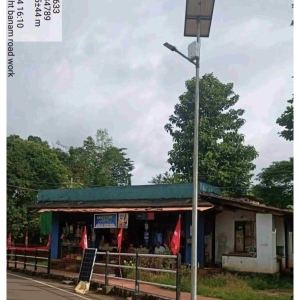
Industrial facilities need dependable outdoor lighting to support daily operations, improve visibility and keep roads, entrances and working areas illuminated after sunset. As businesses explore energy-efficient alternatives, solar street lighting has become an option worth considering for factories, warehouses, industrial parks and commercial properties. For businesses searching for a Solar street light manufacturer in India, understanding the features, applications and selection criteria can help them make an informed decision.
Why Are Solar Street Lights Useful for Industrial Areas?
Factories and industrial premises often cover large areas that require lighting throughout the evening and night. Internal roads, parking spaces, loading zones, storage yards and boundary areas may need consistent illumination for employees, vehicles and visitors.
Conventional lighting systems depend on grid electricity and may require extensive cabling, particularly across large or remote properties. Solar street lights use solar panels to generate electricity during daylight hours and store energy in batteries for nighttime operation. Because these systems can operate independently of a direct grid connection, they may be useful in locations where extending electrical infrastructure is difficult.
The suitability of a solar lighting system depends on the site's sunlight availability, required operating hours, lighting layout and equipment specifications. Careful planning helps businesses choose a solution that matches their actual needs.
Where Can Industrial Solar Street Lights Be Installed?
Solar street lighting can serve several outdoor applications across industrial and commercial environments.
Factories and manufacturing units: Factory entrances, internal roads, employee parking areas and outdoor movement zones may require lighting beyond regular working hours.
Warehouses and logistics centres: Loading areas, vehicle routes, storage yards and access roads can benefit from a properly planned outdoor lighting layout.
Industrial parks: Shared roads, security gates, walkways and common parking areas may need lighting across a large site.
Commercial complexes: Business parks, commercial premises and large parking facilities can consider solar-powered lighting where the installation conditions are suitable.
Roads and public spaces: Solar street lights can also be evaluated for selected roads, pathways and outdoor infrastructure projects, depending on local requirements and lighting standards.
Each application has different requirements. Pole height, spacing, light distribution and expected operating hours should be considered before finalising the system.
Important Features to Consider Before Buying
Choosing an industrial solar street light involves more than comparing product prices or LED wattage. The complete system should suit the installation environment.
1. Solar Panel Performance
Solar panels convert sunlight into electricity that can be stored for later use. Their capacity and placement affect how effectively a lighting system charges during the day. Buyers should consider available sunlight, possible shading and seasonal weather conditions at the installation site.
2. Battery Capacity and Backup
The battery stores energy for nighttime operation. Its capacity should match the LED load, expected lighting duration and local weather conditions. Buyers should ask about backup performance and battery specifications rather than assuming every solar light provides the same operating hours.
3. LED Lighting Performance
LEDs are widely used in outdoor lighting because they can provide effective illumination with relatively low electricity consumption. For industrial applications, buyers should evaluate light output, beam distribution and mounting height. The aim is to achieve suitable coverage without leaving dark spots or directing unnecessary light into surrounding areas.
4. Weather Resistance and Durability
Outdoor equipment must withstand the conditions at the installation site, including rain, dust, heat and wind exposure. Check the product's stated protection rating, construction materials and installation requirements. Specifications should be verified against the conditions the equipment will face.
5. Maintenance and Service Support
Although solar lighting can reduce dependence on grid electricity, the equipment still needs appropriate inspection and maintenance. Solar panels may require cleaning, while batteries, electrical connections and fixtures should be checked according to the manufacturer's recommendations. Warranty terms and service availability are also important factors when comparing suppliers.
How to Choose the Right Lighting Supplier
Before placing an order, prepare a basic site assessment that identifies the areas requiring illumination, operating hours, pole locations and expected lighting levels. This information makes it easier to compare product specifications and request suitable recommendations.
A reliable Solar street light supplier in India should be able to explain the available system configurations, battery capacity, panel specifications, installation requirements and warranty coverage. Ask for technical documentation and confirm whether the proposed system is appropriate for your project.
It is also useful to review the supplier's product range, communication, after-sales support and ability to address your project's requirements. A Solar street light company in India should provide clear information so that buyers can evaluate the product based on its suitability rather than relying only on broad marketing claims.
For projects requiring specific configurations, consider the available options from a Solar LED Street Light Manufacturer in India and compare them against your site's lighting plan, environmental conditions and budget.
Solar Lighting and Sustainable Infrastructure
Solar-powered outdoor lighting can contribute to wider renewable energy efforts by using sunlight as an energy source. It may also help reduce dependence on grid electricity for suitable standalone lighting applications.
However, overall performance depends on correct system sizing, product quality, site conditions and maintenance. Businesses should assess the total project requirements and expected operating conditions before making a purchase. A properly planned installation can support practical lighting needs while helping organisations evaluate more energy-conscious infrastructure choices.
Conclusion
Industrial solar street lighting can be a useful option for factories, warehouses, industrial parks and other outdoor areas when the system is selected according to site conditions and lighting requirements. Reviewing panel capacity, battery backup, LED performance, weather resistance and service support helps businesses make better purchasing decisions. If you are looking for a Solar street light manufacturer in India, explore Zitroen's industrial solar street lighting solutions and review the available options for your project.
Learn more: https://zitroen.in/industrial-solar-street-light/