

Introduction
Managing electrical cables properly is important in factories, offices, commercial buildings, and industrial plants. When cables are left unorganized, maintenance becomes difficult, and the installation can look untidy. A well-planned cable tray system helps keep cables arranged, supported, and accessible whenever repairs or upgrades are needed.
JP Electrical & Controls offers cable management solutions for different electrical installation requirements. Understanding the available cable tray types can help contractors, engineers, and project managers choose products that suit their projects.
What Are the Different Cable Tray Types?
Cable trays are available in different designs, materials, and finishes. The right option depends on the number of cables, their weight, the installation environment, and the available space.
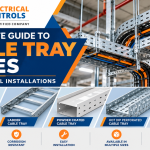
1. Perforated Cable Tray
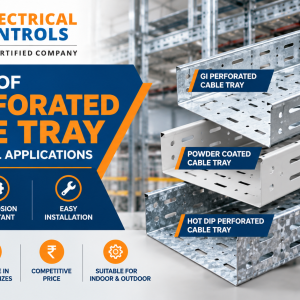
A perforated cable tray has openings along its base and sides. These openings support ventilation and provide convenient access for cable installation and maintenance. It is commonly used in commercial buildings, factories, offices, and electrical rooms.
2. Powder Coated Cable Tray
A powder coated cable tray has a finished surface that can provide additional protection when the coating is suitable for the installation environment. It is often selected for indoor installations where appearance and surface protection are important.
3. Hot Dip Perforated Cable Tray
A hot dip perforated cable tray is generally made from steel with a hot-dip galvanized coating. This coating helps protect the metal against corrosion, making it a practical option for many industrial and outdoor applications.
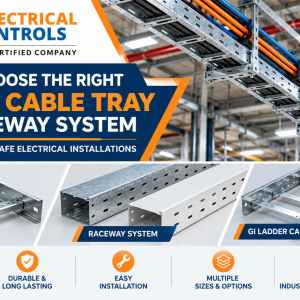
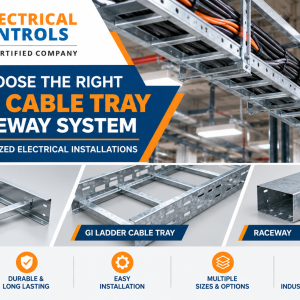
4. GI Perforated Cable Tray
A GI perforated cable tray is manufactured from galvanized steel and is used to support and organize electrical wiring. It is suitable for many commercial and industrial projects, depending on the material specifications and operating conditions.
5. Ladder Cable Tray
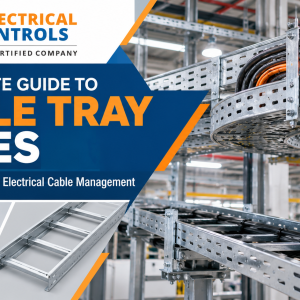
A ladder cable tray has two side rails connected by cross members. Its open structure makes it useful for installations involving larger cable runs and applications where ventilation and cable access are important.
How to Choose the Right Electrical Cable Tray
Before purchasing an electrical cable tray, consider the following factors:
- Cable load: Check the combined weight of the cables and the tray's rated capacity.
- Installation environment: Consider moisture, dust, chemicals, and possible corrosion.
- Available space: Select dimensions that fit the cable route and installation layout.
- Maintenance access: Make sure technicians can inspect and replace cables conveniently.
- Future expansion: Allow suitable capacity for additional cables where practical.
Understanding Cable Tray Sizes and Design
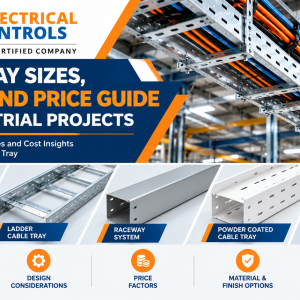
Cable tray sizes usually refer to width, side height, length, and material thickness. The required dimensions depend on cable quantity, cable diameter, weight, and installation requirements.
A proper cable tray design should also account for bends, junctions, supports, couplers, and the route of the cable run. Planning these details before installation can reduce unnecessary modifications and make future maintenance easier.
What Affects Cable Tray Price?
Cable tray price varies according to material, dimensions, thickness, finish, order quantity, and accessories. Galvanized, powder-coated, and hot-dip galvanized products may have different costs because their manufacturing and finishing processes differ.
For an accurate quotation, share the required tray type, dimensions, material specification, quantity, and delivery requirements with the supplier.
Why Choose JP Electrical & Controls?
JP Electrical & Controls provides cable management products for electrical and industrial projects. When selecting a product, buyers should compare material specifications, finish quality, dimensions, load capacity, and suitability for the intended application.
Discussing these requirements with the supplier before ordering can help avoid selecting a tray that is unsuitable for the project.
Frequently Asked Questions
Q1. What are the most common cable tray types?
Perforated cable trays, ladder cable trays, solid-bottom trays, and wire mesh trays are commonly used for different cable management applications.
Q2. Which cable tray is suitable for industrial applications?
Perforated and ladder cable trays are widely used in industrial settings. The appropriate option depends on cable load, ventilation requirements, installation conditions, and the manufacturer's specifications.
Q3. How do I choose the right cable tray sizes?
Consider cable quantity, dimensions, total weight, future expansion, and the tray's rated load capacity.
Q4. What determines cable tray price?
Material, thickness, dimensions, surface finish, quantity, and accessories all influence the price.
Q5. Why is cable tray design important?
A suitable design helps organize cables, provide adequate support, improve maintenance access, and accommodate the installation layout.